My last post concluded by expressing an optimism for the future of a world impacted by AI. This conclusion was almost entirely predicated on the fanciful assumption that AI will have minimal distributional effects. I chose to take this approach as a little jibe over the unrealistic assumptions often seen in economic models and in the interest of keeping the post snappy. This post, however, repeals that assumption. It is therefore unsurprising that its conclusions take a more Orwellian tone.
Let me first make some assertions about the role of human intelligence in modern western economies:1
- Assertion 1
- Intelligence is the most significant factor in determining one’s economic prosperity. There exists a reasonable amount of empirical evidence for this and the causality is intuitive.
- Assertion 2
- The relationship between intelligence and economic prosperity has become stronger in recent history. Societies in the West have become increasingly egalitarian, meaning that other factors are less likely to inhibit the returns from intelligence than they once were. Think class barriers, racial prejudice and educational opportunity. They have all improved.2
- Assertion 3
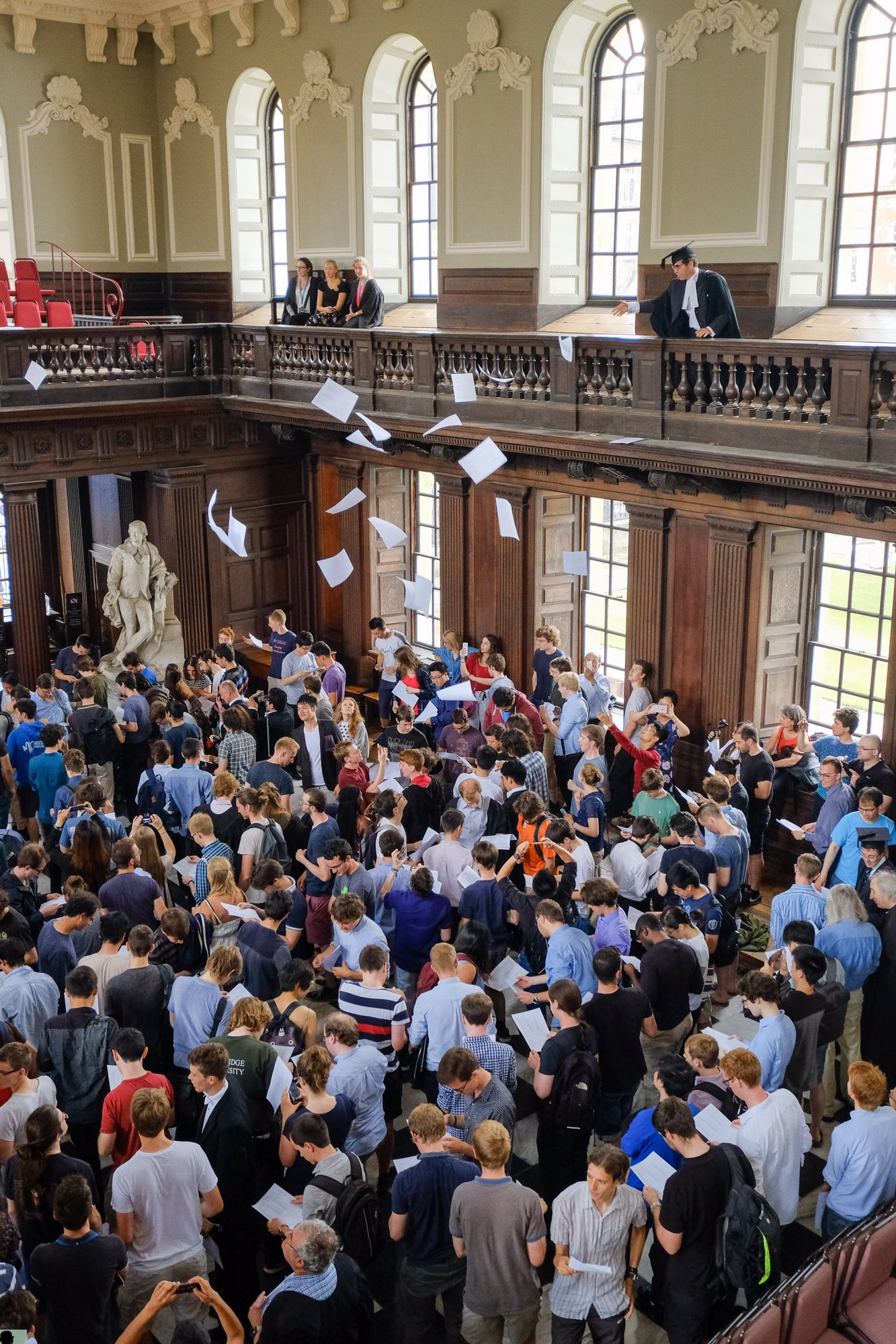
- The marginal returns of intelligence at the top of the distribution are higher today than they have ever been. This is most likely due to the increasing complexity of the problem that humans solve. I have witnessed this anecdotally. A few decades ago, an Oxbridge education (in any discipline) would have guaranteed you a good job in the city. Pay in the city would have been reasonably similar amongst graduates and progress there-on-out was not hugely dependent on intelligence. Today, Cambridge mathmos earn a significant premium over their peers by working in quant finance. Differences are even more granular; mathmos at the top of their class-list do noticeably better in the job market than those further down the ranks.
Now introduce AI. Access to AI will give employers unlimited access to intelligence – its form now computer based rather than human. We are already at the point where human and artificial intelligence are on par. Before long, AI will be factors of magnitude more intelligent than humans. Furthermore, AI will dominate human intelligence beyond just raw power. Human intelligence suffers from the foibles of human nature. Humans get ill. Humans engage in office chit-chat on company time. Humans require socialising via Thursday evening drinks and spend Friday mornings slightly hung-over only to leave the office at 2pm. In contrast, unprecedented levels of investment into data centres and energy infrastructure will give companies on-demand access to 24/7 super-intelligence.
What does this mean for our future selves? Well, this will lead to what I call the “debasement of intelligence”. Intelligence will become so abundant that the returns from having more of it than others will be negligible. 10 IQ points here, 10 points there will amount to nothing – these differences will be dwarfed by the intelligence gap between humans and AI in general. This will work in much the same was a the debasement of a currency – 10 Venezuelan bolívar here, 10 bolívar there will do nothing for you when a beer now costs over 8 million bolívar. And so it follows that intelligence will have a negligible effect on one’s success – different factors altogether will determine individual prosperity. Therefore, it stands that the three assertions stated above will cease to hold. If you’ve been a beneficiary of these assertions, and I suspect if you’re reading this you have been, then I’m sorry to say it, but you’re out of luck.
What does this mean for the leisure oriented society3 I predict will form as a result of AI? Well I think we will see something I am going to call “leisure classes” emerge.4 Today the class structure is most evident in the jobs people do; think of the universal terms “blue-collar” and “white-collar” and “working class”. A world of leisure necessarily means that the type of leisure people engage in will define their class. Leisure classes already exist today; a day of test cricket at Lord’s costs c. £200, a chance to watch from the pavilion as an MCC member requires proposal by a full-member and a thirty-year wait on the waiting list. The AI revolution will widen such gaps.

I am still developing my theory of leisure classes which I will flesh out in my next blog post. Nevertheless, I am already certain that one’s current “working” class will not necessarily map onto an equally ranked leisure class – a frightening thought for those towards the top, an opportunity for those who aren’t.
PS: I endeavour to make my next blog post the final one on AI for a while – a brief history of Wisden Cricketers’ Almanacs is to follow.
- Here, I refer mostly to service based economies like the UK. ↩︎
- This is objectively true – anyone who believes otherwise has been blinded by day-to-day news headlines and failed to see the big picture. ↩︎
- If the notion of a leisure oriented society is new to you, please refer to the final two paragraphs of my last blog post. ↩︎
- Credit to Aineias Arango, with whom I was in a conversation with when we denominated this idea. ↩︎
 laisseth-faire