Author: Lasith Siriwardana

  • Thoughts from 10 days in Japan

    Thoughts from 10 days in Japan

    As I embarked upon an 18 hour journey to Tokyo, it dawned on me that I knew very little about the country I was travelling to. My knowledge extended little beyond the contents of the popular YouTube video “history of japan” by Bill Wurtz. The obligatory Claude query for an overview of Japanese history failed to capture by attention. Although the Meiji restoration was fairly interesting, I was soon distracted by a Wodehouse book I had brought for the journey. I arrived in Tokyo largely uninformed. After a few days in the country, it is clear that I had taken the wrong approach. What was remarkable about Japan was not its history, but how distinct it remains today from the rest of the west.

    Despite being less economically wealthy than Western Europe, Japan feels more developed. This was probably the most striking takeaway from my time in Japan. On per capita PPP adjusted terms, the Japanese economy is roughly 15-20% smaller than Germany, France and the UK. The direction of this fact, let alone the magnitude, still feels downright wrong. Although economic output cannot be measured by eye, the day to day impression of being in Japan felt much more like being in Switzerland than it did Spain.

    G20 GDP per Capita, PPP (2025)

    USD, purchasing power parity.

    Country GDP/Capita
    United States$76,931
    Saudi Arabia$63,051
    Germany$62,824
    Australia$60,194
    Canada$57,990
    South Korea$55,697
    France$55,125
    United Kingdom$53,993
    Italy$53,606
    Spain$49,318
    Japan$48,283
    Russia$42,358
    Turkey$37,301
    Argentina$27,847
    China$25,067
    Mexico$21,912
    Brazil$20,025
    Indonesia$15,091
    South Africa$13,592
    India$10,039

    Source: TradingEconomics. Data as of Dec 2025.

    Infrastructure to be jealous of. The Shinkansen, which opened as the world’s first dedicated high-speed rail line in 1964, remains the jewel of the Japanese infrastructure system. Although the speed of the trains was astonishing, more remarkable was the regularity of the service meaning passengers could simply turn up to the station and book a ticket for the next departure. Beyond this, a system of half-privatisation and regionalisation delivered trains, trams, buses and ferries that ran on time, at reasonable prices with excellent geographical coverage. Timeliness of transport systems was clearly of paramount importance, conductors would rush to ensure that passengers boarded trains quickly as not to delay the service and we received apologies for a five minute delay to a flight we took from Matsuyama to Tokyo – a delay that likely would have gone unacknowledged on the departure boards in Europe.
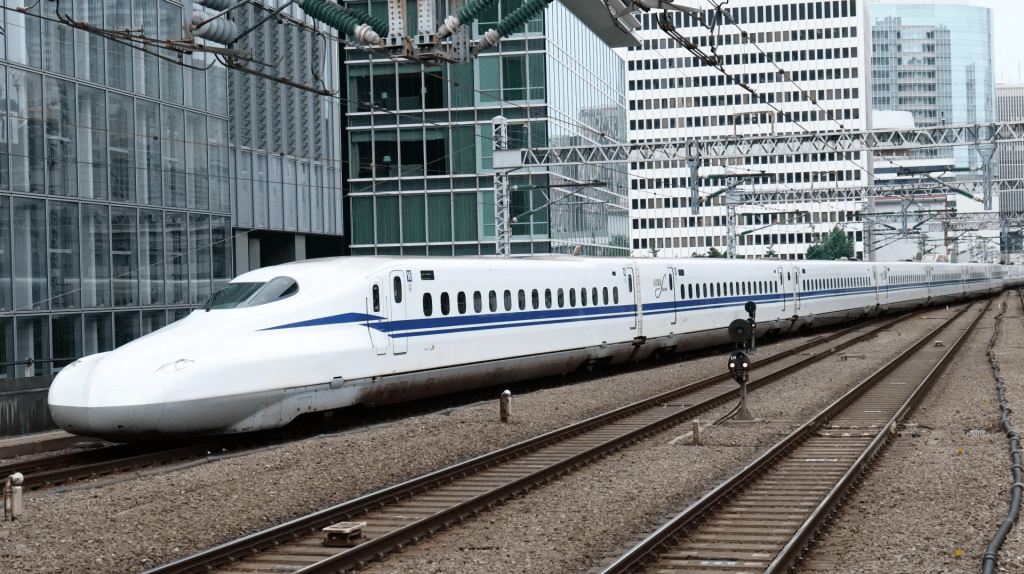
    The Nozomi Shinkansen which connects Tokyo with Osaka in just 2 hours 22 mins

    An enviable level of civic sense and respect. What is instantly noticeable to visitors is how clean Japan is. It was incredibly rare to see litter on road. It is telling, perhaps, that I only spotted litter in the tourist districts of Tokyo, such as Shinjuku and Asakusa, where authorities are now implementing littering fines. Japanese people left train carriages to take phone calls and transport was devoid of the sound of coughing or sneezing. Train conductors would bow upon entering a carriage, and most (although not all) would bow upon exiting despite all the passengers facing away from them. Service staff working in low paying jobs in a country which hasn’t seen real wage growth for decades were enthusiastic and helpful, and were treated with respect. The level to which Japanese people would sacrifice self-interested convenience was remarkable.

    Despite this, American influences are clear. Japan is clearly a consumerist society. Most large train stations have a shopping mall attached, with extensive food and fashion outlets to choose from. There is also an obsession with “stuff”, exemplified by crane game stores, Gashapon (capsule toy) shops and perhaps most effectively by Don Quijote (aka Donki), a retail chain that sells almost anything one can imagine, from rice cookers to party costumes, under one roof. Marketing and advertising are prevalent in cities, and brands rein supreme – apart from California, I haven’t been anywhere where Starbucks is so popular.
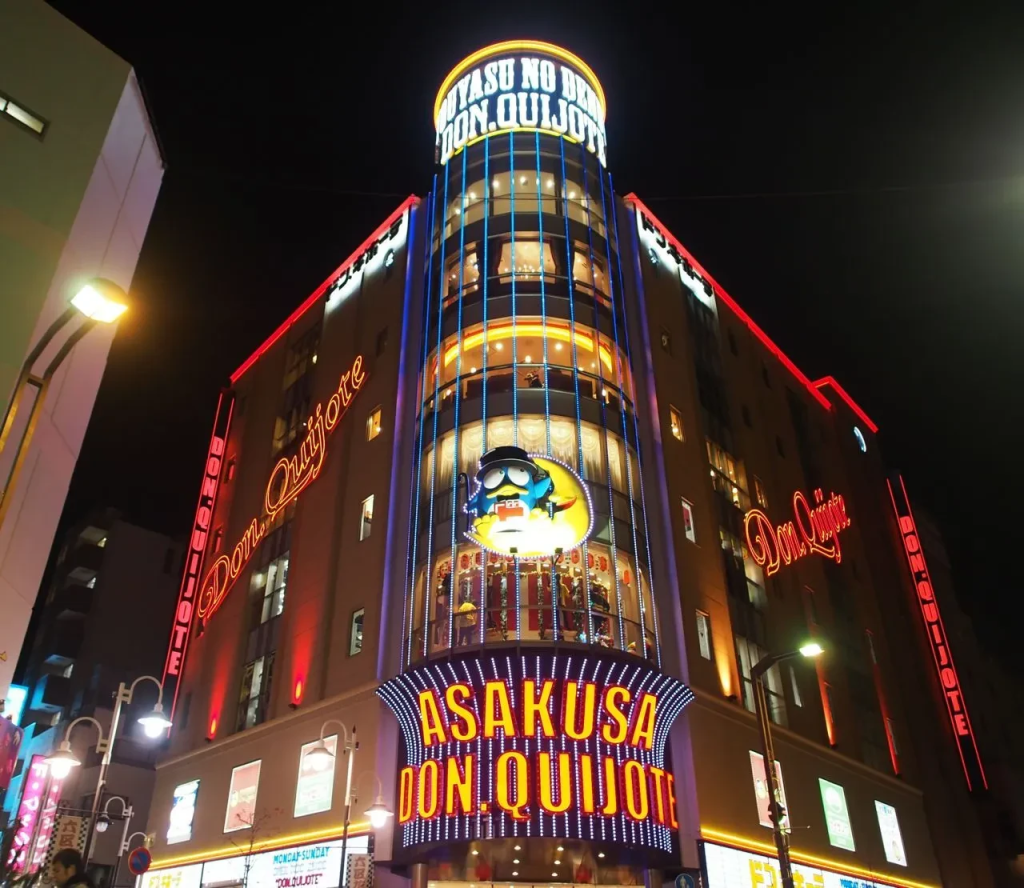
    Don Quijote in Asakusa, Tokyo

    Keeping calm and carrying on. If I had to choose a highlight of my trip to Japan, it was visiting the Peace Memorial Park and Museum in Hiroshima. The museum exhibition was incredibly moving – hardly a word was spoken by the visitors, a mix of both Japanese and foreigners, in the exhibition. Interestingly, I felt that the tone of exhibition was as much focussed on avoiding further atrocities as detailing the suffering by the bombing of Hiroshima. This was representative of the Japanese attitude to adversity. I am told this is a result of Confucian ideas and the regular natural disasters Japan must overcome.

    Palpable demographic decline. There were many signs of the demographic shift Japan is facing. It was not uncommon to see swathes of old people, often on tours designed to keep them entertained, whilst it was rare to see families with multiple children. I passed multiple schools which looked to have been closed for years, likely lacking the number of children required to make them viable.

    There is clearly a less happy side to Japan. Many services in Japan were set up to cater to people on their own. The ramen chain, Ichiran, let customers dine in small booths with next to no interaction with service staff. Most elevators had four floor selection panels in each corner of the elevator so that people could avoid having to ask others to select a floor on their behalf. It made me question whether the proliferation of automation in Japan was purely motivated by the dwindling population. Services like 24 hour convenience stores and a culture in which people don’t want to burden others mean that people could live a life completely withdrawn from society. In fact there is a term for people who live this way in Japan – hikomori.

    My trip to Japan took me to two of the country’s four main islands and just seven of the forty-seven prefectures. With such a relatively small glimpse, it was clear to me that Japan was like no other country I had visited. It remains an extremely organised society that continues to innovate, produce world class businesses and academic research, and plays an important role in the global economy and foreign policy landscape. The country undoubtedly faces challenges, most notably demographic decline. If Japan can protect what makes it special whilst dealing with these challenges, it will be nothing short of a second miracle.

  • Death by Padel

    Death by Padel

    In the first six months of 2025, over 200 pubs in England and Wales closed their doors. This can by overwhelmingly attributed to the Labour government’s tax raid on the hospitality industry. For every £3 spent on pints and food in a pub, approximately £1 now goes to the taxman (British Beer and Pub Association (BPPA) ). The pub, an institution that can trace its roots back to Roman Britannia, is severely under threat. Regular readers of this blog may expect me to dive into a tirade on Labour’s economic ineptitude. However, the factors on the demand side of the pub market are perhaps the more interesting part of the equation. Changing preferences amongst the young, which I myself have been guilty of, threaten the structural viability of pubs beyond the (seemingly fast approaching) end of this Labour nightmare.

    Whilst pubs have been closing at unprecedented rates, a very different pastime has been growing at an astronomical pace: Padel Tennis. The mutant sport, which combines aspects of traditional racket sports like lawn tennis and squash rackets, has exploded in popularity over the last five years. According to the Lawn Tennis Association (LTA), the number of courts in the UK has grown from 50 to 726 in the past four years. Player numbers rose from 6,000 to 129,000 in that same period, with this figure expected to almost quadruple by the end of 2026. “Yuppie” types seem to be the most captured by the game; those with good educations and decent jobs living in Clapham, Camden or the like flock to local Aussie-style cafes for post-padel piccolos.

    One would have to be mad to open a pub today. Opening a padel centre on the other hand seems like a no brainer. With fees often in the triple digits for an hour of court time, padel centres are popping up across the country at an astonishing rate. Powerleague, Europe’s largest five-a-side football provider, is spending £14m on building 17 new padel clubs across the UK in the next two years.

    Judy Murray playing Padel at the Alfred Dunhill Padel Classic at The Hurlingham

    The popularity of padel and the plight of the pub represents a much larger trend we have seen since Covid. Much of Gen Z have graduated from university, begun working in London and garnered some purchasing power. They have abandoned the more traditional forms of socialising, whether that be boozy dinners, pints at the pub or nights out in town, with socialising through sport. Why? Many would suggest that if there is anyone to blame, it must be Andrew Huberman. An associate professor of neurobiology at Stanford, Huberman rose to fame for touting the physiological and psychological ailments associated with drinking on his podcast. His message has since spread like wildfire.

    I do not, however, think this message alone breeds the level of abstinence we observe today. Instead, I suspect the social conditions that young people face set the ideal scene for the anit-booze revolution. Combine Huberman’s message with an increasingly competitive job market, an unascendable housing ladder and the pressures of social media, young people feel the need to focus on productivity, health and progress. Hangovers must be avoided whilst Strava kudos must be earned. To use the contextually appropriate vernacular, young people feel the need to “lock-in”.

    There are many stakeholders in this race. Pub owners, padel entrepreneurs, beverage investors, lawn tennis players and pint enjoyers all have something to win or lose. Therefore, the big question on everyone’s mind is whether this is cyclical or structural. I believe this depends on whether the social conditions I mentioned above are here to stay. The economic woes resulting in unaffordable houses and hopeless job opportunities for university graduates are long term issues to which policy makers lack solutions. Social media certainly isn’t going anywhere. If we want to save our pubs, we must reignite the joviality of Britain’s young first – the pints will then buy themselves.

  • God: The Political Animal

    God: The Political Animal

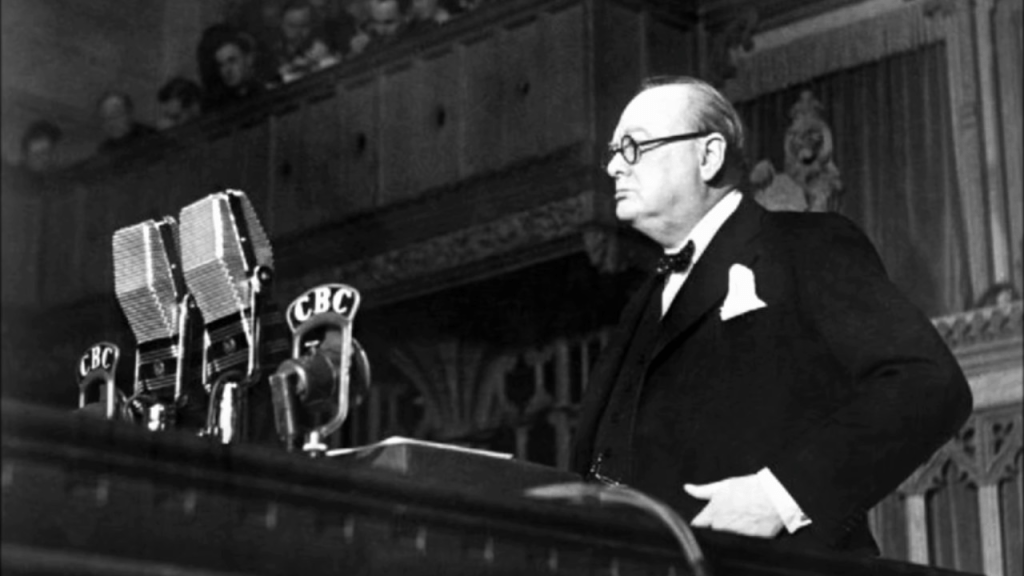
    Winston Churchill’s address to the House of Commons on June 4, 1940 is widely considered the most important speech of the 20th century. The most well-known extract – “we shall fight on the beaches, we shall fight on the landing grounds, we shall fight in the fields and in the streets, we shall fight in the hills; we shall never surrender” – is perhaps the most recognisable quote in the English language. However, it’s the subsequent passage that I believe to be the most powerful of all of Churchill’s orations:

    ” […] and even if, which I do not for a moment believe, this Island or a large part of it were subjugated and starving, then our Empire beyond the seas, armed and guarded by the British Fleet, would carry on the struggle, until, in God’s good time, the New World, with all its power and might, steps forth to the rescue and the liberation of the old.”

    The might of this final appeal should not be a surprise as Churchill, faced with the greatest threat his nation has ever seen, invokes the ultimate form of power: God.

    Churchill speaking in the House of Commons

    The role of God and the Christian faith in Britain has ebbed and flowed over the last century. Its influence waned in the interwar years, as the disillusionment of the First World War and the rise of secular ideologies pushed faith to the margins. During the Second World War it surged again, with Churchill and others invoking God to frame Britain’s struggle as a sacred cause. Since, Britain has secularised at speed. It is estimated that from 1980 to 2015, Church attendance declined from 6,484,300 to 3,081,500 (11.8% to 5.0% of the population). During this period, faith became an increasingly taboo political topic. Famously, Alastair Campbell, Tony Blair’s director of communications, intervened in a 2003 interview to prevent Blair from answering a question about his faith; “We don’t do God,” he interrupted. This was despite Blair being a devout Anglican at the time.1

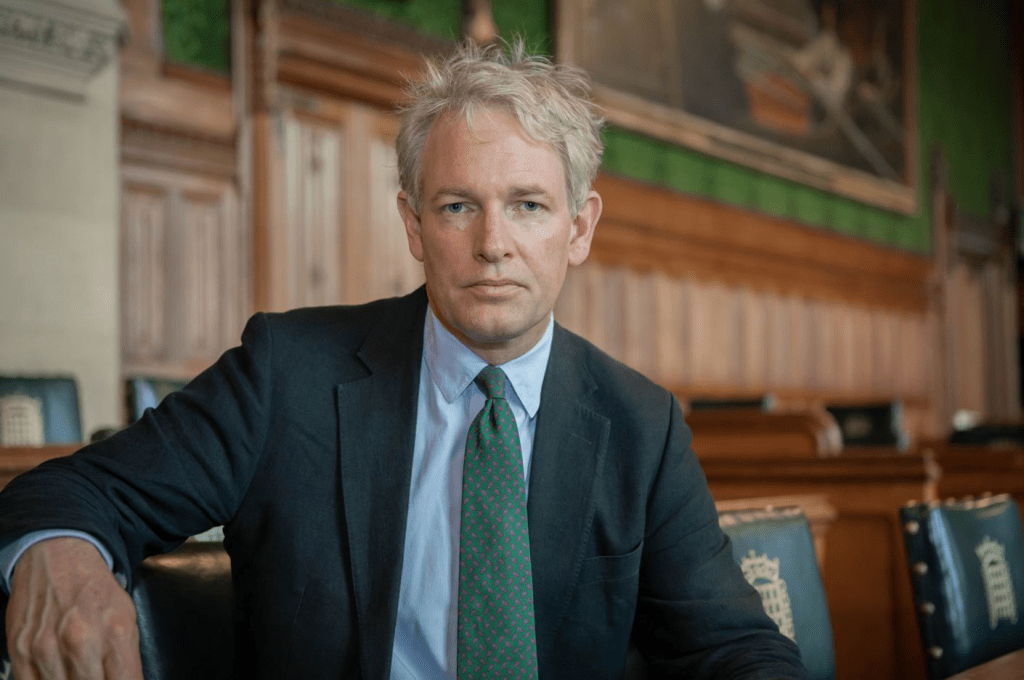
    Today, however, God is firmly back on the menu. It is a dish, like many of the hottest items in British politics, that has a distinctly American flavour. Public expressions of faith are relatively common among US political leaders. American Vice-president, J. D. Vance, regularly references his (Catholic) Christian faith in support of Trumpian policy. As one might expect, this requires a little creative license with ancient scripture – something which has been challenged by many, ranging from Rory Stewart to two Popes. During his recent holiday in the Cotswolds, Vance visited Danny Kruger, a rising Conservative MP, who in late July delivered an excellent speech in the Commons on the role and future of Christianity in Britain. Kruger strikes me as a far more intelligent man than Vance; I imagine that he found any agreement with Vance bittersweet, aware that his views were much more nuanced. Earlier this month, Kemi Badenoch admitted to not believing in God in a BBC interview. Bijan Omrani, the author of “God is an Englishman: Christianity and the Creation of England”, suggests that Badenoch’s willingness to talk about faith indicates a decline in secularism at the forefront of British politics.

    Conservative MP Danny Kruger who delivered a speech in an empty House of Commons on the future of Christianity in Britain

    Why is this happening? Why is Judeo-Christian faith, which has always resided in the political arsenal of the right, only being deployed now? There are a multitude of reasons. Recent policy discussions in Britain about abortion and assisted-dying require moral judgements which necessitate an appeal to our national religion. The uptick in Church attendance, which I believe is primarily driven by a yearning for tradition and community, is another factor. The meteoric rise of public discourse on immigration and multiculturalism, with a particular focus on Islam, is undoubtably the most salient force driving political de-secularisation.

    I believe Britain must tread carefully as we reintegrate faith into public discourse. This is especially true in the current social, political and economic climate – an ideal breeding-ground for populism. Farage has repeatedly described the migrant crisis as “an invasion” by “fighting aged” men. One can see how Farage might invoke faith against such an “invasion” as Churchill did against the Nazi’s in 1940. This I would consider a Vance-esq perversion of Christian teachings; the large majority of illegal immigrants making their way to Britain ultimately come here in search of a better life and originate from war-torn nations. They are not in search of power as Hitler and the Nazis were. An unadulterated interpretation of Christian teachings would most likely advocate helping these people even to our disbenefit – an obviously untenable political position.

    This exposes what I believe to be the key issue with integrating faith into the governance of a nation. Governments and politicians have to make difficult decisions that impact the lives of millions of people who they represent. These decisions cannot be made using religious frameworks without desecrating core religious ideals and creating opportunities for those like Vance to misappropriate that which is sacrosanct. By focussing less on the teachings of religion and instead more on the noncommittal aspects, such as tradition, community and its moral guide, we can integrate faith into public life whilst avoiding its weaponisation.

    1. He has since converted to Catholicism. ↩︎

    Credit to Telegraph article by Charles Moore that inspired this post (here).