Imagine a world in which you can devote the majority of your waking hours to the things you enjoy. Days of early morning commutes to a sedentary desk job formatting spreadsheets are now a distant memory. Instead, you roll out of bed to a full cooked breakfast; gone are the days of overnight oats. You then take a leisurely stroll to your local cricket ground where you are meeting 10 of your friends. Today is the 4th day of the test match you are playing against a rival amateur team. What bliss!
“I am not always punctual in rising. On this particular morning I was feeling so supremely braced that I actually gave the bad old alarm clock a cold and scornful look as it tried to hoist me out of bed at 8:30. Why not, I thought, give it the miss in baulk and snooze on till luncheon?”
– Bertie Wooster, The Inimitable Jeeves by P.G. Wodehouse1
But will this really be the typical life of those living in the AI world? I very much doubt it. Society in the AI world, I believe, will be vastly more unequal than it is today. The reasons for this are two-fold: the first is that AI will concentrate economic value with those who understand, use and own it. Very simply, imagine that AI replaces all the workers in an industry; the returns that once flowed to workers (through wages) will now flow to those who control the AI infrastructure the industry now relies upon. The second is that increased time for leisure will mean more time for social signalling – a non-negotiable of human nature. Consider a corporate office in London. Your boss may have a flashier watch than you, but you work in the same office, wear broadly the same clothes and most probably both get the Tube to work. This doesn’t apply to on the weekend – your boss might spend it at their country house whilst you are stuck in your London apartment; they might go shooting whilst you pop out for a Gail’s. In an AI world, the weekend is unending.

It may, therefore, be of interest to think about where in society one might rank once the AI revolution has run its course. I present a framework of “leisure classes” to formalise such thoughts. The framework comprises the following four classes:
Leisure Class 1 is composed of the AI overlords – they are the very few who have attained unprecedented (in the most literal sense) level of wealth. They have achieved this feat by owning a large share of the AI infrastructure that the world’s business operate on – they own data centres and crucial AI intellectual property. These businesses, due to their large economies of scale, are likely monopolies and therefore extract vast profits. LC1 includes the likes of Larry Ellison, Sam Altman and the Google co-founders, Larry Page and Sergey Brin. Not only can they afford mega-yachts and private jets but they can afford holiday to the moon and Mars. The race to be in this class is over – this rocket has already had lift-off.
Members of Leisure Class 2 will essentially be able to enjoy all the luxuries afforded by those in LC1 bar maybe the most opulent. Members include two types of people: the first is those who have built AI businesses upon the aforementioned infrastructure. The vast applications of AI present a variety of opportunities to be a member of LC2. The AI world is your oyster; a smart idea and a little execution could land you a spot in LC2. Those at the top of leisure industries will also be members of LC2. Consider the various activities that humans enjoy – those at the top are AI immune. No one wants to listen to music generated by an AI. Neither do they want to read a book written by a large language model or watch two robots play chess against each other. It is the human imperfections of these things that we love. This is already acutely apparent: consider the pushback against completely replacing line judges at Wimbledon with Hawkeye. No one turns up to Carnegie Hall to watch a self-playing Steinway perform an AI generated piece of music. Compare this to Nobuyuki Tsujii’s moving performance of his own composition, “Elegy for the Victims of the Tsunami … in Japan” (here). Talented individuals like Tsujii will be increasingly valued in a leisure dominated world and compensated duly. Again, you could be a part of this sub-category of LC2 – a bit of talent and hard work could get you there.
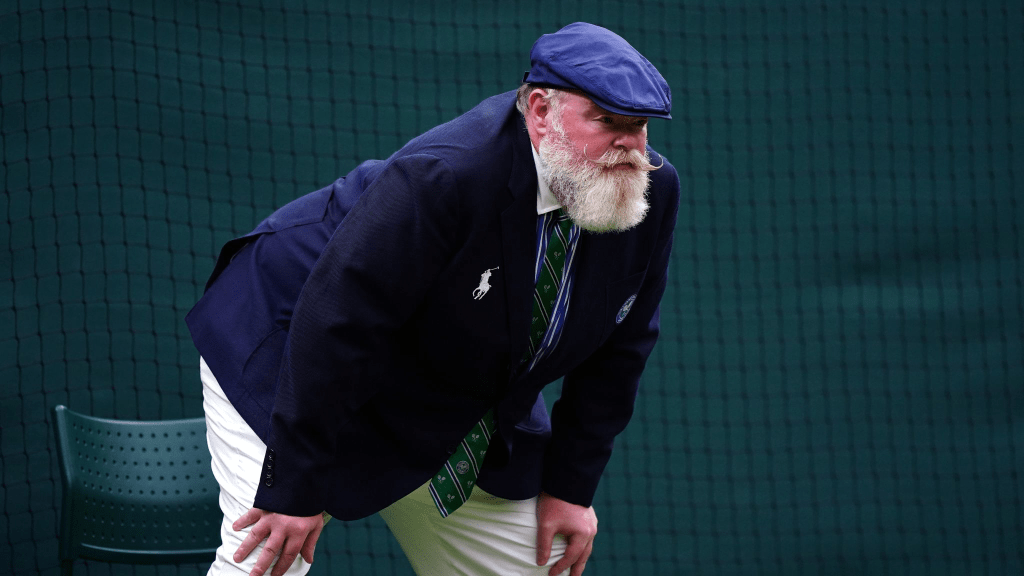
Leisure Class 3 will be for those that work for AI businesses. And because of the super-intelligence of AI, the scope of these roles will be very limited. Human workers won’t manage the allocation of AI resources, there will be an AI to do that. These roles will almost certainly be mandatory regulatory roles. These individuals will research AI safety concerns and implement regulation according . Despite the required expertise, these roles will not generate much revenue thereby limiting their financial reward. Despite this, they will afford much higher quality leisure than those in the final class below them.
Leisure Class 4 will comprise of those who were unable to capture any of the opportunities from the AI revolution. More likely that not, these individuals will conduct manual tasks which are yet to be automated and will rely on a universal basic income bestowed by the benevolence of the AI overlords in LC1. These individuals will afford a subsistence level of leisure – maybe a SkySports subscription or an occasional visit to watch second tier sports leagues in person.
Having recently convinced myself of the above framework I have found myself suffering from “leisure class anxiety”. The prospects of LC2 membership are much more palatable to me than a bleak life in LC3 or, god forbid, LC4. It is therefore no surprise that I have thrown myself headfirst into a machine learning project over the past few days. In fact, it’s part of the reason I’m trying to consistently write on this blog – a role as a journalist at the FT or the Spectator may bag me a spot at the bottom of LC2. For the time being, I think this prudent. Silently, I would welcome a mathematical proof showing the inability of AI to do certain tasks. But until that day comes, I’m going to keep buggering on.
- It was the reading of P. G. Wodehouse’s Jeeves books that sparked me to write this three-part series on AI and leisure. ↩︎
 laisseth-faire