I envy those who have so far avoided the Jubilee “Surrounded” debates which have riddled the internet for the best part of a year now. The series has amassed millions of views through its full-feature length videos and derived short-form content. At first glance, we may welcome the popularity of these videos; public discourse is an incredibly important aspect of democracy which should be encouraged. Debate allows those holding certain views to be challenged whilst granting them the opportunity to defend these views under scrutiny. Ultimately it allows both participants and observers to amend their views and convictions on the issues that matter to them. However, a closer look at Jubilee’s videos reveals a reality quite different from this ideal. Instead, the current state of internet “debate” rewards vehemently expressed extremes at the expense of reasoned discourse.
The most recent video of the series saw Mehdi Hasan, a well known left wing commentator, “surrounded” by 20 far-right American conservatives. However, it quickly transpired that Hasan was up against people who were, to use his own words, “a little bit more than far right republican”. One guest proudly admitted to being a fascist, an admission met with applause from others in the room, whilst another told Hasan to “get the hell out” when Hasan raised the fact that he himself was an immigrant when discussing immigration.
About halfway through the 100 minute long video, it was abundantly clear that none of the 20 participants were there with the intention of, or perhaps even the ability to, have a reasonable debate with Hasan. One might think that Jubilee had intentionally chosen such participants in attempt to maximise jaw-dropping moments and thereby views. I personally disagree with Mehdi Hasan on many of his views ranging from taxation to illegal immigration. I would have valued seeing him truly challenged with cogent well-ariticulated arguments. More importantly, I think it would have been important for fans of Hasan to be exposed to such content. Jubilee disregarded an opportunity to improve public discourse in the US in favour of viral clips and views.
If you are in any doubt of Jubilee’s disregard for showcasing intellectual debate, the Red Flag feature of the Surrounded format makes it unmistakably clear. If a majority of the 19 observers raise their red flags, the current debater is voted out. Most debaters are voted out within minutes. Those rewarded by the red flag system are those who score easy points by citing facts, often of doubtful authenticity, or using emotive anecdotes. Very rarely does the flag system enable a well constructed logical argument that may challenge the expert. Guests don’t want to sit through a peer defining terms or laying out coherent arguments when they themselves could be on the hot seat banging the drum.
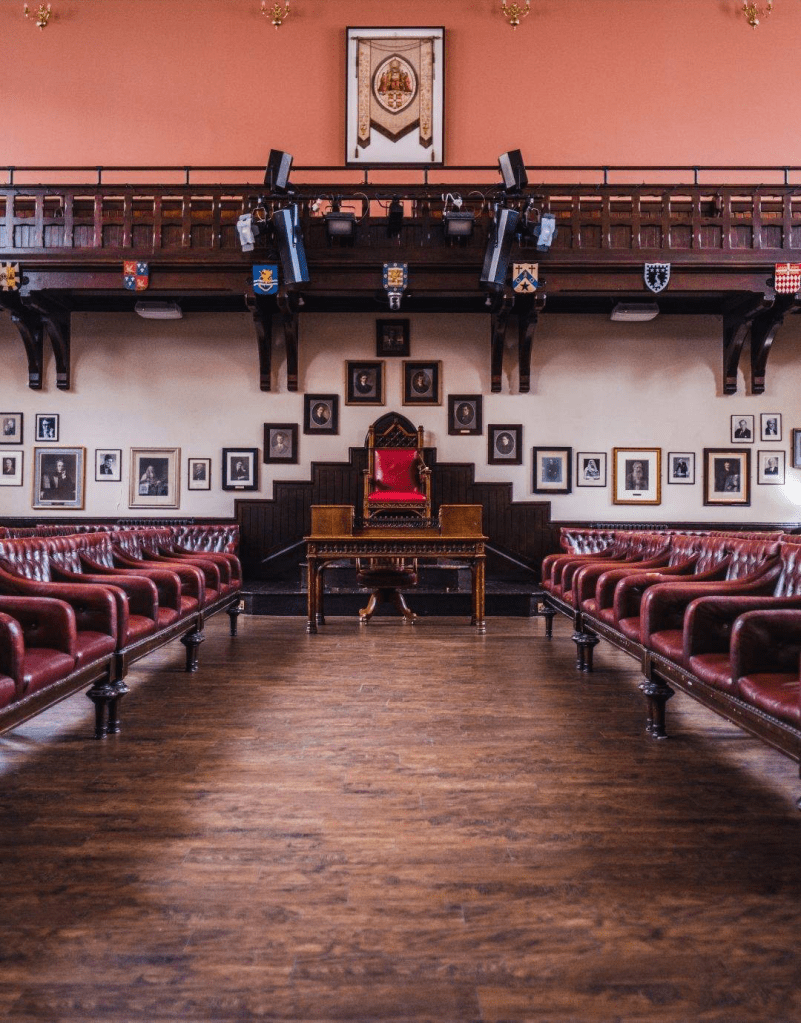
The problems with and popularity of Jubilee’s Surrounded format represents a much wider issue that has permeated the spirit of debate across a variety of platforms. From internet podcasts to Cambridge Union debates to motions in the House of Commons, the focus on scoring short-term points with those on one’s own side of the argument has supplanted the purpose of debate – to convince the marginal and, if effective, change the minds of the already decided.
Countless “commentators” have risen to fame in recent years enabled by limp-lipped podcasts hosts. None I find more infuriating than Gary Stevenson, a.k.a Gary’s Economics, who travels from podcast to podcast spreading his own radical, nonsensical version of economics. Hosts like Chris Williamson and The Diary of a CEO’s Steven Bartlett podcast let him run amok whilst qualified macroeconomists cringe knowing that they would eat Gary for breakfast.1 But this is merely the tip of the iceberg when it comes to internet podcasts. The meteoric growth of the format has given way to hundreds of uninformed podcasters interviewing hundreds of unqualified guests who spread nonsense under the guise of being an expert. Dissect these podcasts into short-format clips and the internet is plagued with unchallenged rhetoric taken out of context.
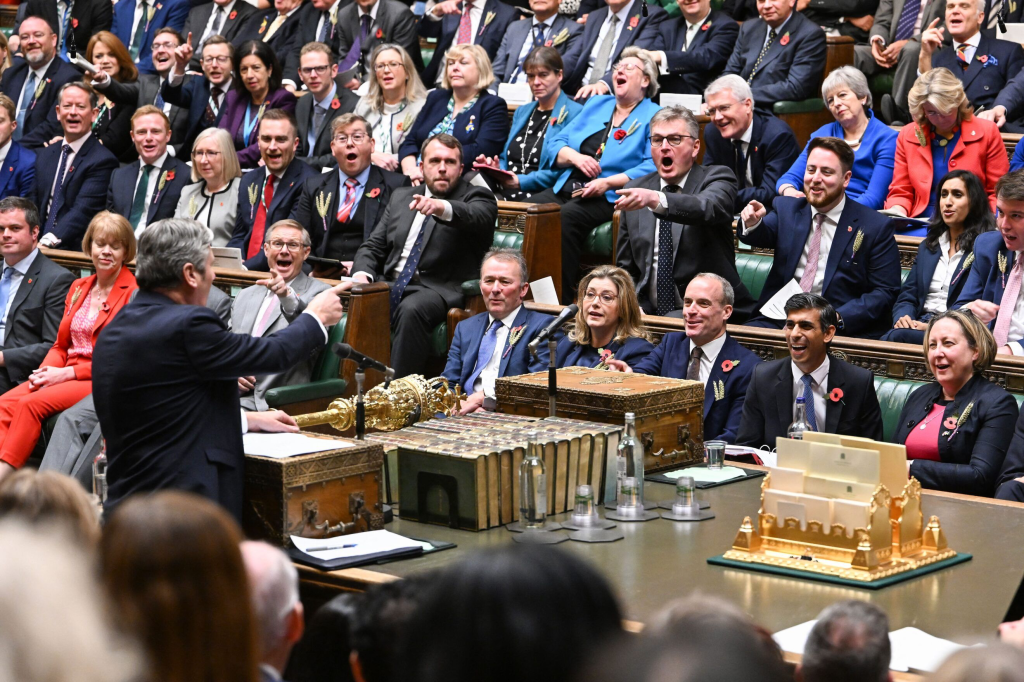
Perhaps the most important victim of the attention-seeking debate culture has been this country’s highest form of office: the Houses of Parliament. Both houses have been broadcasted to the public since the 1980’s. Unsurprisingly, PMQs is the most popular item of the week. Party politics has always been the name of the game at PMQs but never to the extent it is today where the content of PMQs seems irrelevant – what matters is if The Telegraph considers Kemi to have silenced Starmer or fallen flat in the following morning’s paper. Increasingly this is not determined by cogent argument but whether the Leader of the Opposition can berate the Prime Minister for his failings whilst amply deflecting the return fire. Those who supported televising Parliament in the 1980s could not have anticipated the harm it might cause in today’s politically polarised, internet-driven world; 40 years on, I am certain it was a mistake.
A strong atmosphere of public discourse is essential for a well functioning democracy. We often underestimate how much online debates shape the conversations we have in person. I will admit that the majority of arguments I make in conversation are not originally my own but taken from an article I have read, a debate I have watched or a conversation I have had with someone else. Good arguments spread exponentially whilst bad ones fall by the wayside. An absence of quality arguments in the media threatens to nip this process in the bud; if intelligent arguments are replaced by derisive rhetoric, polarisation is inevitable. Although this is an artefact of modern media, it is not an inescapable one. We must look past the YouTube main page for political content and beyond Instagram feeds for news. Instead read newspaper and magazine articles in their totality, seek out podcasters and guests who are well researched and qualified, and reward content creators that are in search of true debate rather than viral moments.2 Once a process of rewarding intellectual discourse begins, we may hope to escape the race to the bottom we currently find ourselves in.
- Maybe I will write a post trying to eat Gary for breakfast. ↩︎
- I hope you might find examples of such content in my Further Reading page. ↩︎
 laisseth-faire