Winston Churchill’s address to the House of Commons on June 4, 1940 is widely considered the most important speech of the 20th century. The most well-known extract – “we shall fight on the beaches, we shall fight on the landing grounds, we shall fight in the fields and in the streets, we shall fight in the hills; we shall never surrender” – is perhaps the most recognisable quote in the English language. However, it’s the subsequent passage that I believe to be the most powerful of all of Churchill’s orations:
” […] and even if, which I do not for a moment believe, this Island or a large part of it were subjugated and starving, then our Empire beyond the seas, armed and guarded by the British Fleet, would carry on the struggle, until, in God’s good time, the New World, with all its power and might, steps forth to the rescue and the liberation of the old.”
The might of this final appeal should not be a surprise as Churchill, faced with the greatest threat his nation has ever seen, invokes the ultimate form of power: God.
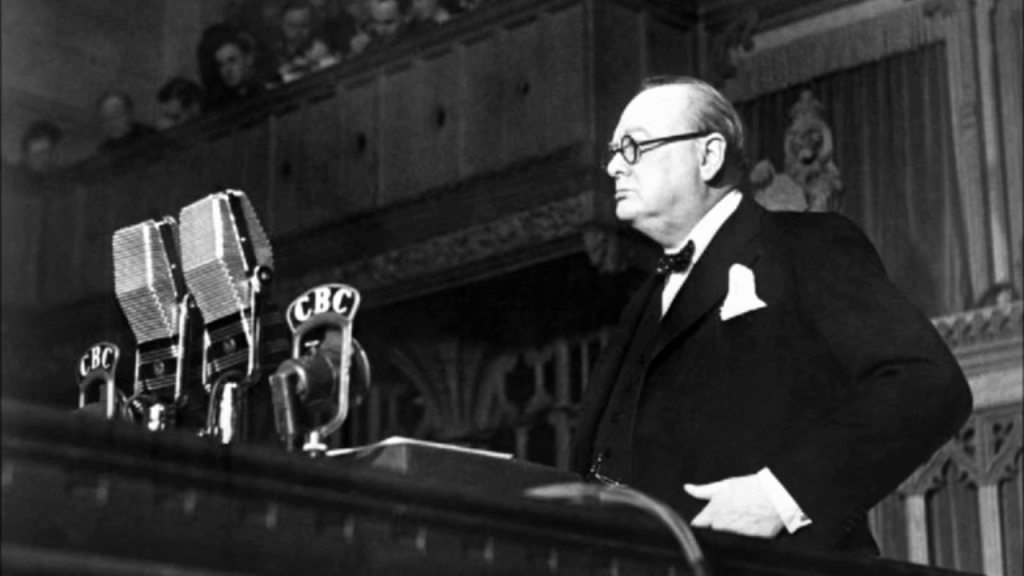
The role of God and the Christian faith in Britain has ebbed and flowed over the last century. Its influence waned in the interwar years, as the disillusionment of the First World War and the rise of secular ideologies pushed faith to the margins. During the Second World War it surged again, with Churchill and others invoking God to frame Britain’s struggle as a sacred cause. Since, Britain has secularised at speed. It is estimated that from 1980 to 2015, Church attendance declined from 6,484,300 to 3,081,500 (11.8% to 5.0% of the population). During this period, faith became an increasingly taboo political topic. Famously, Alastair Campbell, Tony Blair’s director of communications, intervened in a 2003 interview to prevent Blair from answering a question about his faith; “We don’t do God,” he interrupted. This was despite Blair being a devout Anglican at the time.1
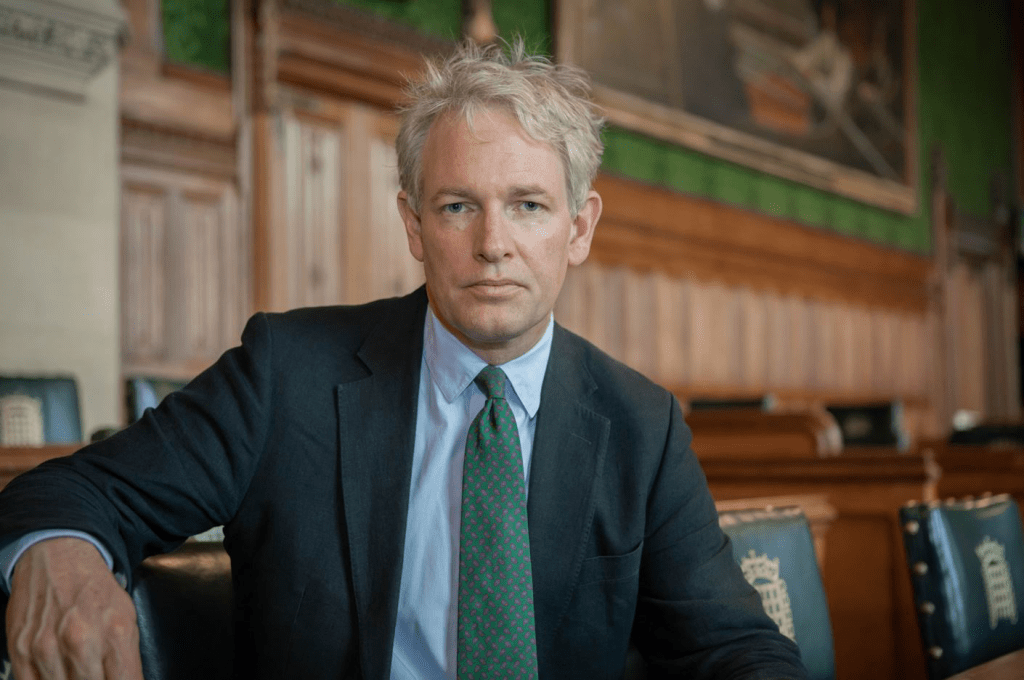
Today, however, God is firmly back on the menu. It is a dish, like many of the hottest items in British politics, that has a distinctly American flavour. Public expressions of faith are relatively common among US political leaders. American Vice-president, J. D. Vance, regularly references his (Catholic) Christian faith in support of Trumpian policy. As one might expect, this requires a little creative license with ancient scripture – something which has been challenged by many, ranging from Rory Stewart to two Popes. During his recent holiday in the Cotswolds, Vance visited Danny Kruger, a rising Conservative MP, who in late July delivered an excellent speech in the Commons on the role and future of Christianity in Britain. Kruger strikes me as a far more intelligent man than Vance; I imagine that he found any agreement with Vance bittersweet, aware that his views were much more nuanced. Earlier this month, Kemi Badenoch admitted to not believing in God in a BBC interview. Bijan Omrani, the author of “God is an Englishman: Christianity and the Creation of England”, suggests that Badenoch’s willingness to talk about faith indicates a decline in secularism at the forefront of British politics.
Why is this happening? Why is Judeo-Christian faith, which has always resided in the political arsenal of the right, only being deployed now? There are a multitude of reasons. Recent policy discussions in Britain about abortion and assisted-dying require moral judgements which necessitate an appeal to our national religion. The uptick in Church attendance, which I believe is primarily driven by a yearning for tradition and community, is another factor. The meteoric rise of public discourse on immigration and multiculturalism, with a particular focus on Islam, is undoubtably the most salient force driving political de-secularisation.
I believe Britain must tread carefully as we reintegrate faith into public discourse. This is especially true in the current social, political and economic climate – an ideal breeding-ground for populism. Farage has repeatedly described the migrant crisis as “an invasion” by “fighting aged” men. One can see how Farage might invoke faith against such an “invasion” as Churchill did against the Nazi’s in 1940. This I would consider a Vance-esq perversion of Christian teachings; the large majority of illegal immigrants making their way to Britain ultimately come here in search of a better life and originate from war-torn nations. They are not in search of power as Hitler and the Nazis were. An unadulterated interpretation of Christian teachings would most likely advocate helping these people even to our disbenefit – an obviously untenable political position.
This exposes what I believe to be the key issue with integrating faith into the governance of a nation. Governments and politicians have to make difficult decisions that impact the lives of millions of people who they represent. These decisions cannot be made using religious frameworks without desecrating core religious ideals and creating opportunities for those like Vance to misappropriate that which is sacrosanct. By focussing less on the teachings of religion and instead more on the noncommittal aspects, such as tradition, community and its moral guide, we can integrate faith into public life whilst avoiding its weaponisation.
- He has since converted to Catholicism. ↩︎
Credit to Telegraph article by Charles Moore that inspired this post (here).
 laisseth-faire