As I embarked upon an 18 hour journey to Tokyo, it dawned on me that I knew very little about the country I was travelling to. My knowledge extended little beyond the contents of the popular YouTube video “history of japan” by Bill Wurtz. The obligatory Claude query for an overview of Japanese history failed to capture by attention. Although the Meiji restoration was fairly interesting, I was soon distracted by a Wodehouse book I had brought for the journey. I arrived in Tokyo largely uninformed. After a few days in the country, it is clear that I had taken the wrong approach. What was remarkable about Japan was not its history, but how distinct it remains today from the rest of the west.
Despite being less economically wealthy than Western Europe, Japan feels more developed. This was probably the most striking takeaway from my time in Japan. On per capita PPP adjusted terms, the Japanese economy is roughly 15-20% smaller than Germany, France and the UK. The direction of this fact, let alone the magnitude, still feels downright wrong. Although economic output cannot be measured by eye, the day to day impression of being in Japan felt much more like being in Switzerland than it did Spain.
G20 GDP per Capita, PPP (2025)
USD, purchasing power parity.
| Country | GDP/Capita |
|---|---|
| United States | $76,931 |
| Saudi Arabia | $63,051 |
| Germany | $62,824 |
| Australia | $60,194 |
| Canada | $57,990 |
| South Korea | $55,697 |
| France | $55,125 |
| United Kingdom | $53,993 |
| Italy | $53,606 |
| Spain | $49,318 |
| Japan | $48,283 |
| Russia | $42,358 |
| Turkey | $37,301 |
| Argentina | $27,847 |
| China | $25,067 |
| Mexico | $21,912 |
| Brazil | $20,025 |
| Indonesia | $15,091 |
| South Africa | $13,592 |
| India | $10,039 |
Source: TradingEconomics. Data as of Dec 2025.
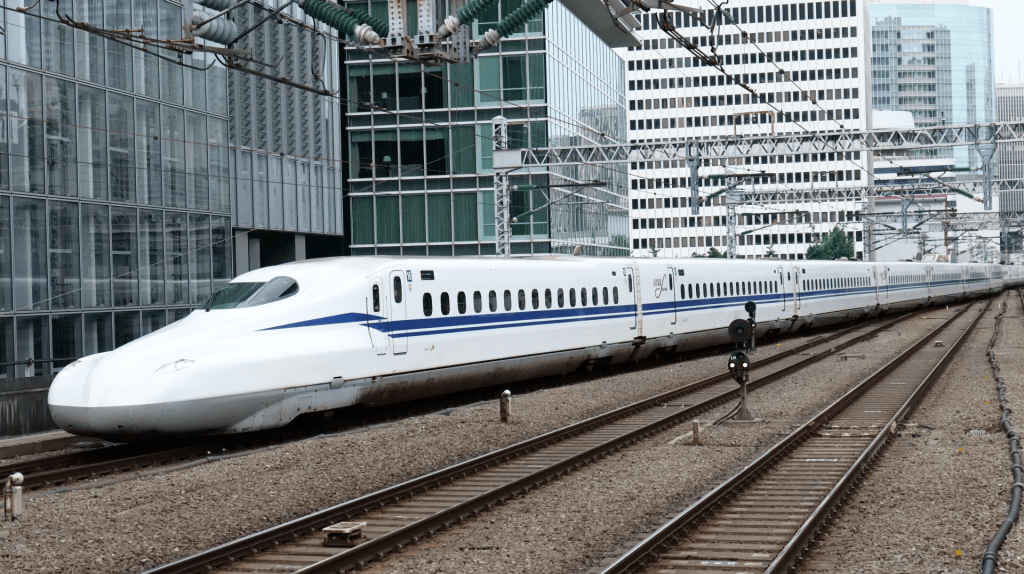
Infrastructure to be jealous of. The Shinkansen, which opened as the world’s first dedicated high-speed rail line in 1964, remains the jewel of the Japanese infrastructure system. Although the speed of the trains was astonishing, more remarkable was the regularity of the service meaning passengers could simply turn up to the station and book a ticket for the next departure. Beyond this, a system of half-privatisation and regionalisation delivered trains, trams, buses and ferries that ran on time, at reasonable prices with excellent geographical coverage. Timeliness of transport systems was clearly of paramount importance, conductors would rush to ensure that passengers boarded trains quickly as not to delay the service and we received apologies for a five minute delay to a flight we took from Matsuyama to Tokyo – a delay that likely would have gone unacknowledged on the departure boards in Europe.
An enviable level of civic sense and respect. What is instantly noticeable to visitors is how clean Japan is. It was incredibly rare to see litter on road. It is telling, perhaps, that I only spotted litter in the tourist districts of Tokyo, such as Shinjuku and Asakusa, where authorities are now implementing littering fines. Japanese people left train carriages to take phone calls and transport was devoid of the sound of coughing or sneezing. Train conductors would bow upon entering a carriage, and most (although not all) would bow upon exiting despite all the passengers facing away from them. Service staff working in low paying jobs in a country which hasn’t seen real wage growth for decades were enthusiastic and helpful, and were treated with respect. The level to which Japanese people would sacrifice self-interested convenience was remarkable.
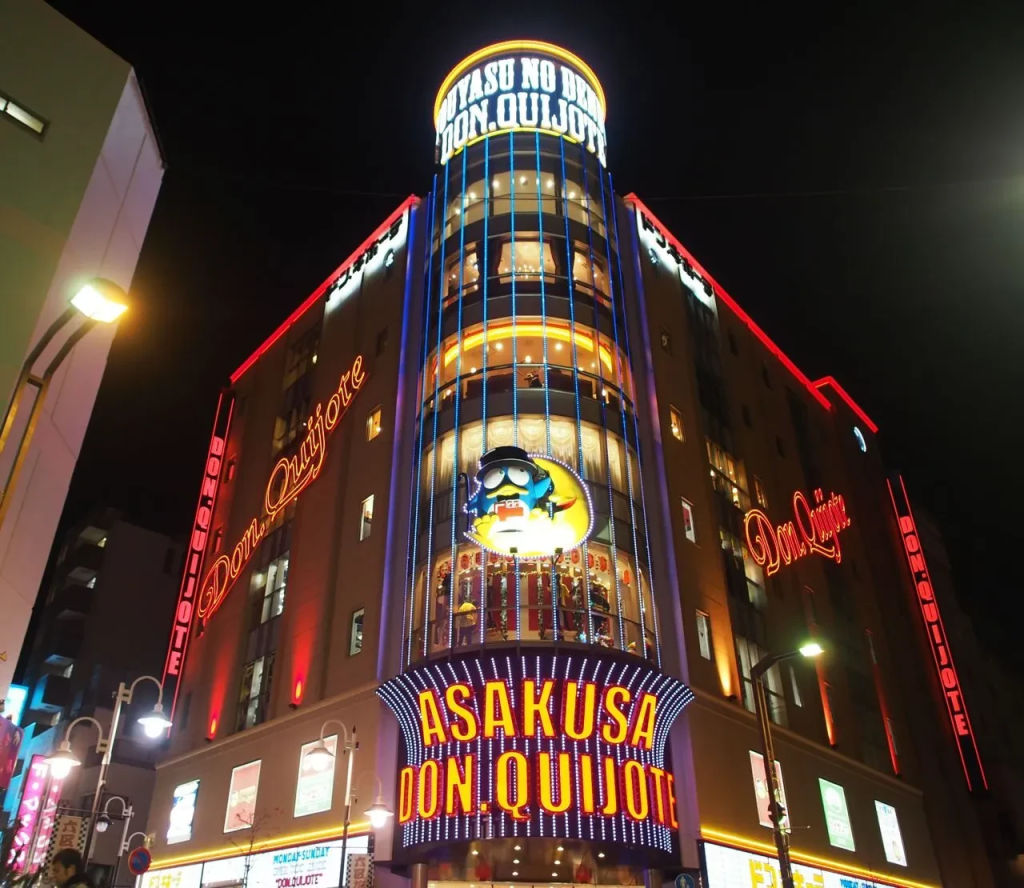
Despite this, American influences are clear. Japan is clearly a consumerist society. Most large train stations have a shopping mall attached, with extensive food and fashion outlets to choose from. There is also an obsession with “stuff”, exemplified by crane game stores, Gashapon (capsule toy) shops and perhaps most effectively by Don Quijote (aka Donki), a retail chain that sells almost anything one can imagine, from rice cookers to party costumes, under one roof. Marketing and advertising are prevalent in cities, and brands rein supreme – apart from California, I haven’t been anywhere where Starbucks is so popular.
Keeping calm and carrying on. If I had to choose a highlight of my trip to Japan, it was visiting the Peace Memorial Park and Museum in Hiroshima. The museum exhibition was incredibly moving – hardly a word was spoken by the visitors, a mix of both Japanese and foreigners, in the exhibition. Interestingly, I felt that the tone of exhibition was as much focussed on avoiding further atrocities as detailing the suffering by the bombing of Hiroshima. This was representative of the Japanese attitude to adversity. I am told this is a result of Confucian ideas and the regular natural disasters Japan must overcome.
Palpable demographic decline. There were many signs of the demographic shift Japan is facing. It was not uncommon to see swathes of old people, often on tours designed to keep them entertained, whilst it was rare to see families with multiple children. I passed multiple schools which looked to have been closed for years, likely lacking the number of children required to make them viable.
There is clearly a less happy side to Japan. Many services in Japan were set up to cater to people on their own. The ramen chain, Ichiran, let customers dine in small booths with next to no interaction with service staff. Most elevators had four floor selection panels in each corner of the elevator so that people could avoid having to ask others to select a floor on their behalf. It made me question whether the proliferation of automation in Japan was purely motivated by the dwindling population. Services like 24 hour convenience stores and a culture in which people don’t want to burden others mean that people could live a life completely withdrawn from society. In fact there is a term for people who live this way in Japan – hikomori.
My trip to Japan took me to two of the country’s four main islands and just seven of the forty-seven prefectures. With such a relatively small glimpse, it was clear to me that Japan was like no other country I had visited. It remains an extremely organised society that continues to innovate, produce world class businesses and academic research, and plays an important role in the global economy and foreign policy landscape. The country undoubtedly faces challenges, most notably demographic decline. If Japan can protect what makes it special whilst dealing with these challenges, it will be nothing short of a second miracle.


Leave a Reply