Author: Lasith Siriwardana

  • The Debasement of Intelligence

    The Debasement of Intelligence

    My last post concluded by expressing an optimism for the future of a world impacted by AI. This conclusion was almost entirely predicated on the fanciful assumption that AI will have minimal distributional effects. I chose to take this approach as a little jibe over the unrealistic assumptions often seen in economic models and in the interest of keeping the post snappy. This post, however, repeals that assumption. It is therefore unsurprising that its conclusions take a more Orwellian tone.

    Let me first make some assertions about the role of human intelligence in modern western economies:1

    • Assertion 1
      • Intelligence is the most significant factor in determining one’s economic prosperity. There exists a reasonable amount of empirical evidence for this and the causality is intuitive.
    • Assertion 2
      • The relationship between intelligence and economic prosperity has become stronger in recent history. Societies in the West have become increasingly egalitarian, meaning that other factors are less likely to inhibit the returns from intelligence than they once were. Think class barriers, racial prejudice and educational opportunity. They have all improved.2
    • Assertion 3
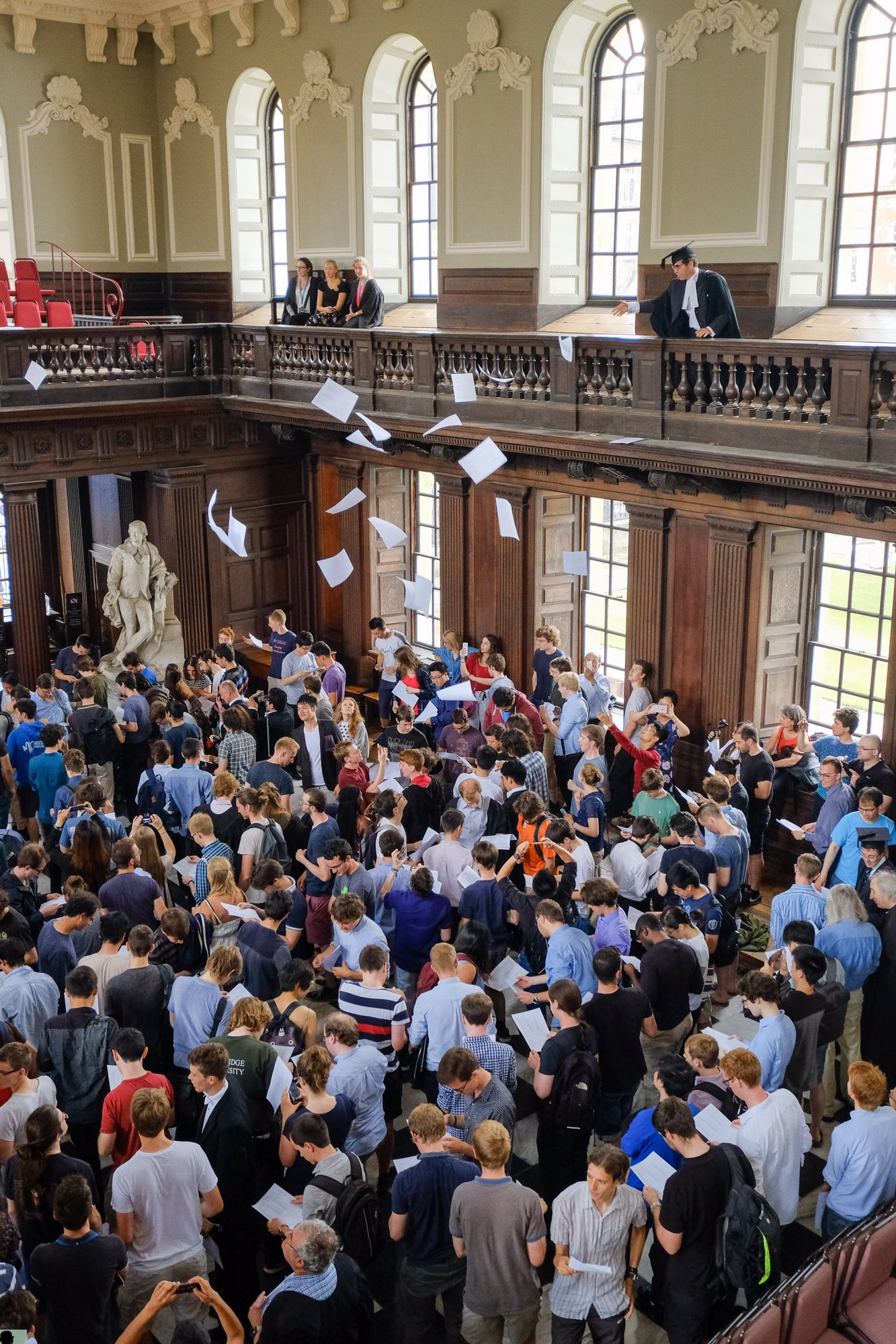
      • The marginal returns of intelligence at the top of the distribution are higher today than they have ever been. This is most likely due to the increasing complexity of the problem that humans solve. I have witnessed this anecdotally. A few decades ago, an Oxbridge education (in any discipline) would have guaranteed you a good job in the city. Pay in the city would have been reasonably similar amongst graduates and progress there-on-out was not hugely dependent on intelligence. Today, Cambridge mathmos earn a significant premium over their peers by working in quant finance. Differences are even more granular; mathmos at the top of their class-list do noticeably better in the job market than those further down the ranks.
    Printed copies of Mathematical Tripos results being thrown from the balcony in the Senate House, Cambridge

    Now introduce AI. Access to AI will give employers unlimited access to intelligence – its form now computer based rather than human. We are already at the point where human and artificial intelligence are on par. Before long, AI will be factors of magnitude more intelligent than humans. Furthermore, AI will dominate human intelligence beyond just raw power. Human intelligence suffers from the foibles of human nature. Humans get ill. Humans engage in office chit-chat on company time. Humans require socialising via Thursday evening drinks and spend Friday mornings slightly hung-over only to leave the office at 2pm. In contrast, unprecedented levels of investment into data centres and energy infrastructure will give companies on-demand access to 24/7 super-intelligence.

    What does this mean for our future selves? Well, this will lead to what I call the “debasement of intelligence”. Intelligence will become so abundant that the returns from having more of it than others will be negligible. 10 IQ points here, 10 points there will amount to nothing – these differences will be dwarfed by the intelligence gap between humans and AI in general. This will work in much the same was a the debasement of a currency – 10 Venezuelan bolívar here, 10 bolívar there will do nothing for you when a beer now costs over 8 million bolívar. And so it follows that intelligence will have a negligible effect on one’s success – different factors altogether will determine individual prosperity. Therefore, it stands that the three assertions stated above will cease to hold. If you’ve been a beneficiary of these assertions, and I suspect if you’re reading this you have been, then I’m sorry to say it, but you’re out of luck.

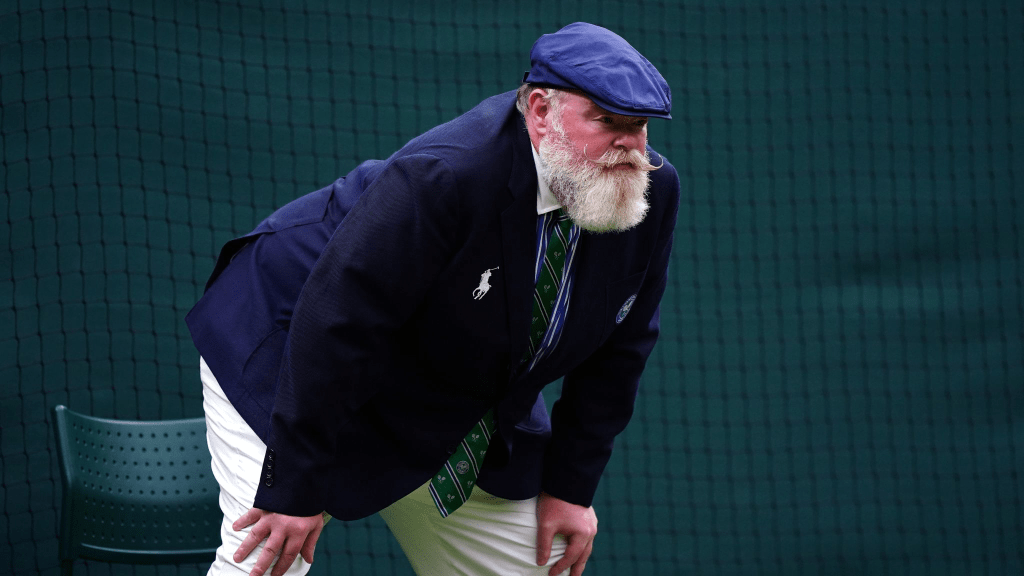
    What does this mean for the leisure oriented society3 I predict will form as a result of AI? Well I think we will see something I am going to call “leisure classes” emerge.4 Today the class structure is most evident in the jobs people do; think of the universal terms “blue-collar” and “white-collar” and “working class”. A world of leisure necessarily means that the type of leisure people engage in will define their class. Leisure classes already exist today; a day of test cricket at Lord’s costs c. £200, a chance to watch from the pavilion as an MCC member requires proposal by a full-member and a thirty-year wait on the waiting list. The AI revolution will widen such gaps.

    An MCC Member at Lord’s

    I am still developing my theory of leisure classes which I will flesh out in my next blog post. Nevertheless, I am already certain that one’s current “working” class will not necessarily map onto an equally ranked leisure class – a frightening thought for those towards the top, an opportunity for those who aren’t.

    PS: I endeavour to make my next blog post the final one on AI for a while – a brief history of Wisden Cricketers’ Almanacs is to follow.

    1. Here, I refer mostly to service based economies like the UK. ↩︎
    2. This is objectively true – anyone who believes otherwise has been blinded by day-to-day news headlines and failed to see the big picture. ↩︎
    3. If the notion of a leisure oriented society is new to you, please refer to the final two paragraphs of my last blog post. ↩︎
    4. Credit to Aineias Arango, with whom I was in a conversation with when we denominated this idea. ↩︎
  • AI Opportunities for our Grandchildren

    AI Opportunities for our Grandchildren

    My last post (published over a BA ago) referenced the Keynesian Consumption Function in its approach. The eponym of this laughably oversimplifying economic assumption is largely unknown to those outside of the dismal science. Yet, I believe there exists a compelling argument to consider John Maynard Keynes the next time you’re asked for your dream dinner guest.

    Born to a middle class family in Cambridge, Keynes won a scholarship to study at Eton. From there, he returned to Cambridge to study Mathematics at King’s. During this time, he was president of the University Liberal Club, president of the Union, and a member of the University Pitt Club. He was also an active member of the Cambridge Apostles during what many consider to be its heyday. This most secret of Cambridge societies was founded by George Tomlinson (an Olavian-Johnian1 like myself) in 1820 for the most learned of Cantabrigians to engage in highbrow chat. Around a century later, the mother of an Apostle called it a “hotbed of vice” upon discovering her son’s letters. Nevertheless, Keynes’s Cambridge was undeniably a hotbed of intellectual activity. He graduated with a first and continued to be involved with the university for some time, attending economics lectures as a graduate having been urged to do so by the famously sexist economist, Alfred Marshall.

    Over the following few decades, Keynes essentially fathered the modern field of macroeconomics. He argued that the government had a role to play in attenuating the business cycle by implementing counter-cyclical policy. Why? Well basically because people don’t like to see the key number on their pay slip go down. Don’t see how these two things are linked? Unfortunately, explaining why in simple terms is beyond my writing and economics abilities. You will have to ask a “macro specialist” – I know one or two who I can get you in touch with if you’re really interested.

    Keynes’s magnum opus, The General Theory of Employment, Interest and Money essentially made him a post-Depression celebrity. The rejection of the neoliberal laissez-faire paradigm caught on. In April 1942, Keynes joined the Bank of England and in June he was rewarded for his service with a hereditary peerage in the King’s Birthday Honours. He took his seat in the Lords on the Liberal Party benches (don’t let this stop you from reading on).

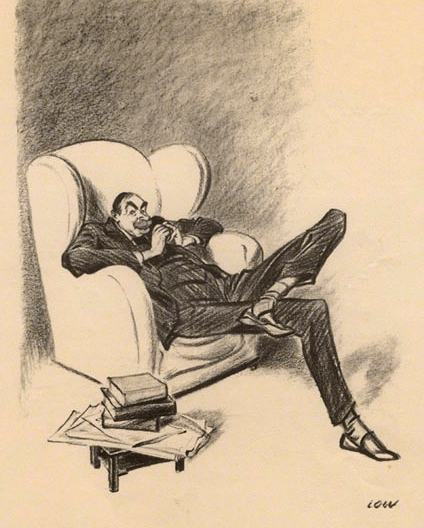
    Caricature of Keynes by David Low, 1934

    Following the war, Keynes and his idea in The General Theory were crucial in establishing the post-war global order. Keynes was heavily involved, as leader of the British delegation and chairman of the World Bank commission, in the mid-1944 negotiations that established the Bretton Woods system. He also proposed the creation of a common world unit of currency, the bancor and new global institutions. Although these did not materialise immediately, they were essentially manifested in the creation of the IMF and its Special Drawing Rights (SDR) function. Keynes rubbed shoulders (or more likely elbows at his towering height of 6ft 7) with the likes of FDR and negotiated fiercely with Harry Dexter White. He was able to obtain a preferential position for Britain but ultimately failed to implement his ideas globally. Despite this, Keynes was crucial in constructing the global world in which we live today.

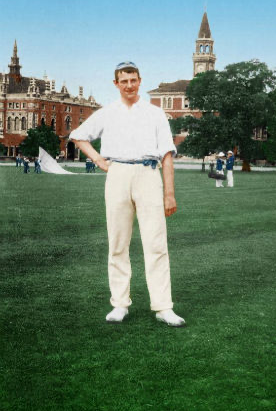
    P. G. Wodehouse at Dulwich College

    This is all very interesting; all very impressive. But it’s Keynes’s views on leisure2 that have really stuck out to me lately. For my own leisure, I picked up some P. G. Wodehouse this Christmas. Envious of Bertie Wooster’s position as a societal drone I was reminded of Keynes’s 1928 essay Economic Possibilities for our Grandchildren. He posits that one day “the economic problem may be solved” and that “for the first time since his creation man will be faced with his real, his permanent problem-how to use his freedom from pressing economic cares, how to occupy the leisure, which science and compound interest will have won for him”. Keynes was no stranger to leisure; he had a passion for theatre, ballet, art, literature and philosophy which he shared with the likes of E. M. Forster and Virginia Woolf as a part of the Bloomsbury Set.

    46 Gordon Square, Bloomsbury, London where Keynes lived from 1916

    I wonder what Keynes would have thought about the recent developments in AI which is most certainly the type of science he anticipated in his essay. For the purpose of this post, let us assume away the bleak complications threatened by AI. I, for one, am hopeful. And I suspect Keynes would share my sentiment; he was considered by many an unbending optimist. He would have been particularly grateful for more time to indulge in the arts with his Bloomsbury chums. Taking a sporting view, I envision the demise of T20 cricket and the return of the superior format to the top of the agenda as hundreds of millions of fans are released from the shackles of work. Although could this go too far? Would these fans start reading through their copies of Wisden at a loss for what to do?

    1. Tomlinson was at St Saviour’s school before its amalgamation with St Olave’s. ↩︎
    2. Leisure is an economist’s word for anything that isn’t paid work. ↩︎

  • How Effective are Stimulus Checks?

    How Effective are Stimulus Checks?

    As a part of the Coronavirus Aid, Relief and Economic Security (CARES) Act, the US Federal government made one time payments directly to households. A relatively high income threshold meant that most Americans were eligible for a payment with adults receiving a payment of $1200 and children receiving $500. The intended effect of these checks was to increase aggregate consumption in the US economy, easing economic decline as a result of the pandemic. We will examine the effectiveness of stimulus checks through the lens of a Keynesian consumption function and Friendman’s permanent income hypothesis (PIH). We will use evidence from households’ spending reports from a Fintech non-profit, a large scale survey of US households and aggregate evidence following the 2001 and 2008 tax rebates.

    The Keynesian Consumption Function

    Traditional macroeconomic theory would explain how stimulus checks would stimulate the economy through the Keynesian consumption function which takes the following form: C = a + b(Yd) where C is total aggregate consumption, Yd is real disposable income, a is autonomous consumption and b is the marginal propensity to consume (MPC). Stimulus payments, such as those included in the CARES Act, are intended to increase Yd, thus increasing households’ consumption. This will cause an increase in aggregate demand, lessening economic contraction during a recession. From the consumption function it can be seen that the effectiveness of the stimulus checks depends on the size of the MPC, with a larger MPC resulting in a larger increase in consumption (and larger multiplier effect) whilst a smaller MPC results in a smaller increase in consumption (and smaller multiplier effect).

    Baker et al. (2020) use high-frequency transaction data from a Fintech non-profit, called SaverLife, to analyse the size of the MPC and how it is affected by income and liquidity. It should be considered that SaverLife users have relatively low income, with average disposable income of $36,000 per annum and median checking account balance of $98. The typical individual in the sample used by the researchers exhibited a rise in mean daily spending from $90 to $250 for the weekdays after receipt of the stimulus, with the increase in spending mostly driven by food and non-durables. The researchers also found that the MPC of SaverLife users varied greatly with level of income, with users having a monthly income above $2000 estimated to have an MPC of 0.325 whilst users with an income below $2000 per month estimated to have an MPC of 0.571. MPC also varied greatly with checking account balance, with users in the 4th quartile of checking account balance having an estimated MPC of 0.256 whilst those in the 1st quartile have an MPC of 0.468. These results may be useful in guiding targeted stimulus measures in the future in order to make stimulus checks more effective.

    Coibion et al. (2020) consider a broader sample, using a large-scale survey of US consumers to study how stimulus checks affected consumption. When asked to break down how US households spent (or planned to spend) their checks, on average around 30% was saved, 30% was used to pay existing debts and the remaining 40% was spent on consumption. In short Coibon found that the average MPC out of stimulus payments was little over 0.4 with almost 40% of respondents having a MPC of 0.

    Therefore, we can see that both the data from SaverLife and the large scale survey suggest that the MPC out of stimulus payments was low, reducing the effectiveness of the policy. We can potentially explain this by using the permanent income hypothesis.

    The Permanent Income Hypothesis

    Unlike the Keynesian consumption function, which believes that current levels of consumption depend only on current levels of income, Friedman’s permanent income hypothesis believes that consumers consider expected future levels of income when deciding what proportion of their marginal income to spend on consumption. Under the PIH model, a temporary increase in income will only result in a small increase in present consumption as future income expectations are unimpacted. Consumers will save the majority of the temporary increase in income to smooth consumption in the future. The model requires a rise in permanent income (long-term expected income) for consumption to rise. This may arise from an increase in wage levels or the introduction of a universal basic income for example. Therefore, the PIH model predicts that stimulus checks, a form of temporary income, will have little effect on current levels of consumption.

    We can look at aggregate consumption data following tax rebates in 2001 and 2008 to confirm these predictions. In May of 2008, as part of the Economic Stimulus Act of 2008, tax rebates were made to households. Figure 1 shows that the temporary rebate had little to no effect on aggregate consumption. A more formal regression technique by Taylor (2009), which corrected for changes in oil prices, also found the rebates to be insignificant. When Taylor conducted a regression using disposable income minus the rebate (permanent income) he found the increase in consumption to be statistically significant. These findings are consistent with the PIH model.

    As part of the Economic Growth and Tax Relief Reconciliation Act of 2001, most American taxpayers received checks of up to $300 per individual. Shapiro and Slemrod (2003) used surveys to look for evidence of lagged responses. Of those who initially said they would mostly save their rebate, 93.4% said that they would try to keep up a higher saving (or lower debt) for at least a year, when asked 6 months later.1 This is consistent with the PIH model. Shapiro and Slemrod (2009) carried out a similar survey in 2008, in which only 18% of those who said they were saving the rebate said they would spend it later. Therefore, in both 2001 and 2008 consumers did not expect to spend their rebates. This is consistent with the predictions of the PIH model as consumers would only spend if increases in income were permanent.

    Conclusion

    It is clear from the evidence used that stimulus checks are ineffective at stimulating aggregate consumption, as past uses of stimulus checks have rendered low MPCs which can be explained through the PIH. This low MPC means that the aggregate effect of the policy is low (due to a small multiplier effect) and also means that the policy provides little “bang for the buck” when fiscal resources are scarce. In the future it may be possible to target such stimulus at those with lower liquidity or income who exhibit higher MPCs. Despite this MPCs will still remain relatively low due to the income being temporary. Instead, policies that increase wages, a form of permanent income, should be considered.