Category: Considerations

  • Death by Padel

    Death by Padel

    In the first six months of 2025, over 200 pubs in England and Wales closed their doors. This can by overwhelmingly attributed to the Labour government’s tax raid on the hospitality industry. For every £3 spent on pints and food in a pub, approximately £1 now goes to the taxman (British Beer and Pub Association (BPPA) ). The pub, an institution that can trace its roots back to Roman Britannia, is severely under threat. Regular readers of this blog may expect me to dive into a tirade on Labour’s economic ineptitude. However, the factors on the demand side of the pub market are perhaps the more interesting part of the equation. Changing preferences amongst the young, which I myself have been guilty of, threaten the structural viability of pubs beyond the (seemingly fast approaching) end of this Labour nightmare.

    Whilst pubs have been closing at unprecedented rates, a very different pastime has been growing at an astronomical pace: Padel Tennis. The mutant sport, which combines aspects of traditional racket sports like lawn tennis and squash rackets, has exploded in popularity over the last five years. According to the Lawn Tennis Association (LTA), the number of courts in the UK has grown from 50 to 726 in the past four years. Player numbers rose from 6,000 to 129,000 in that same period, with this figure expected to almost quadruple by the end of 2026. “Yuppie” types seem to be the most captured by the game; those with good educations and decent jobs living in Clapham, Camden or the like flock to local Aussie-style cafes for post-padel piccolos.

    One would have to be mad to open a pub today. Opening a padel centre on the other hand seems like a no brainer. With fees often in the triple digits for an hour of court time, padel centres are popping up across the country at an astonishing rate. Powerleague, Europe’s largest five-a-side football provider, is spending £14m on building 17 new padel clubs across the UK in the next two years.

    Judy Murray playing Padel at the Alfred Dunhill Padel Classic at The Hurlingham

    The popularity of padel and the plight of the pub represents a much larger trend we have seen since Covid. Much of Gen Z have graduated from university, begun working in London and garnered some purchasing power. They have abandoned the more traditional forms of socialising, whether that be boozy dinners, pints at the pub or nights out in town, with socialising through sport. Why? Many would suggest that if there is anyone to blame, it must be Andrew Huberman. An associate professor of neurobiology at Stanford, Huberman rose to fame for touting the physiological and psychological ailments associated with drinking on his podcast. His message has since spread like wildfire.

    I do not, however, think this message alone breeds the level of abstinence we observe today. Instead, I suspect the social conditions that young people face set the ideal scene for the anit-booze revolution. Combine Huberman’s message with an increasingly competitive job market, an unascendable housing ladder and the pressures of social media, young people feel the need to focus on productivity, health and progress. Hangovers must be avoided whilst Strava kudos must be earned. To use the contextually appropriate vernacular, young people feel the need to “lock-in”.

    There are many stakeholders in this race. Pub owners, padel entrepreneurs, beverage investors, lawn tennis players and pint enjoyers all have something to win or lose. Therefore, the big question on everyone’s mind is whether this is cyclical or structural. I believe this depends on whether the social conditions I mentioned above are here to stay. The economic woes resulting in unaffordable houses and hopeless job opportunities for university graduates are long term issues to which policy makers lack solutions. Social media certainly isn’t going anywhere. If we want to save our pubs, we must reignite the joviality of Britain’s young first – the pints will then buy themselves.
  • God: The Political Animal

    God: The Political Animal

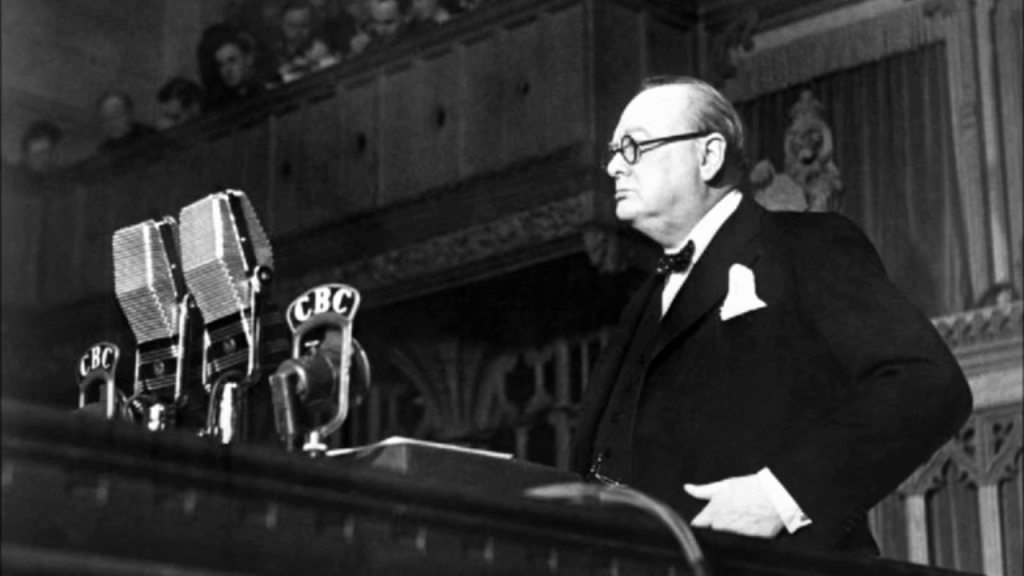
    Winston Churchill’s address to the House of Commons on June 4, 1940 is widely considered the most important speech of the 20th century. The most well-known extract – “we shall fight on the beaches, we shall fight on the landing grounds, we shall fight in the fields and in the streets, we shall fight in the hills; we shall never surrender” – is perhaps the most recognisable quote in the English language. However, it’s the subsequent passage that I believe to be the most powerful of all of Churchill’s orations:

    ” […] and even if, which I do not for a moment believe, this Island or a large part of it were subjugated and starving, then our Empire beyond the seas, armed and guarded by the British Fleet, would carry on the struggle, until, in God’s good time, the New World, with all its power and might, steps forth to the rescue and the liberation of the old.”

    The might of this final appeal should not be a surprise as Churchill, faced with the greatest threat his nation has ever seen, invokes the ultimate form of power: God.

    Churchill speaking in the House of Commons

    The role of God and the Christian faith in Britain has ebbed and flowed over the last century. Its influence waned in the interwar years, as the disillusionment of the First World War and the rise of secular ideologies pushed faith to the margins. During the Second World War it surged again, with Churchill and others invoking God to frame Britain’s struggle as a sacred cause. Since, Britain has secularised at speed. It is estimated that from 1980 to 2015, Church attendance declined from 6,484,300 to 3,081,500 (11.8% to 5.0% of the population). During this period, faith became an increasingly taboo political topic. Famously, Alastair Campbell, Tony Blair’s director of communications, intervened in a 2003 interview to prevent Blair from answering a question about his faith; “We don’t do God,” he interrupted. This was despite Blair being a devout Anglican at the time.1

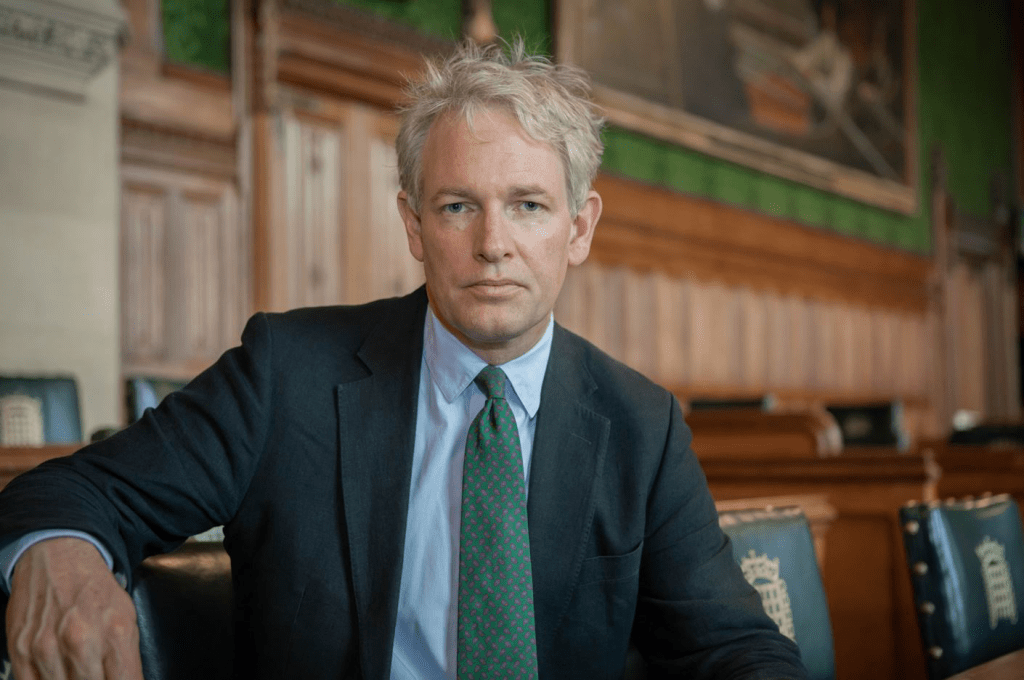
    Today, however, God is firmly back on the menu. It is a dish, like many of the hottest items in British politics, that has a distinctly American flavour. Public expressions of faith are relatively common among US political leaders. American Vice-president, J. D. Vance, regularly references his (Catholic) Christian faith in support of Trumpian policy. As one might expect, this requires a little creative license with ancient scripture – something which has been challenged by many, ranging from Rory Stewart to two Popes. During his recent holiday in the Cotswolds, Vance visited Danny Kruger, a rising Conservative MP, who in late July delivered an excellent speech in the Commons on the role and future of Christianity in Britain. Kruger strikes me as a far more intelligent man than Vance; I imagine that he found any agreement with Vance bittersweet, aware that his views were much more nuanced. Earlier this month, Kemi Badenoch admitted to not believing in God in a BBC interview. Bijan Omrani, the author of “God is an Englishman: Christianity and the Creation of England”, suggests that Badenoch’s willingness to talk about faith indicates a decline in secularism at the forefront of British politics.

    Conservative MP Danny Kruger who delivered a speech in an empty House of Commons on the future of Christianity in Britain

    Why is this happening? Why is Judeo-Christian faith, which has always resided in the political arsenal of the right, only being deployed now? There are a multitude of reasons. Recent policy discussions in Britain about abortion and assisted-dying require moral judgements which necessitate an appeal to our national religion. The uptick in Church attendance, which I believe is primarily driven by a yearning for tradition and community, is another factor. The meteoric rise of public discourse on immigration and multiculturalism, with a particular focus on Islam, is undoubtably the most salient force driving political de-secularisation.

    I believe Britain must tread carefully as we reintegrate faith into public discourse. This is especially true in the current social, political and economic climate – an ideal breeding-ground for populism. Farage has repeatedly described the migrant crisis as “an invasion” by “fighting aged” men. One can see how Farage might invoke faith against such an “invasion” as Churchill did against the Nazi’s in 1940. This I would consider a Vance-esq perversion of Christian teachings; the large majority of illegal immigrants making their way to Britain ultimately come here in search of a better life and originate from war-torn nations. They are not in search of power as Hitler and the Nazis were. An unadulterated interpretation of Christian teachings would most likely advocate helping these people even to our disbenefit – an obviously untenable political position.

    This exposes what I believe to be the key issue with integrating faith into the governance of a nation. Governments and politicians have to make difficult decisions that impact the lives of millions of people who they represent. These decisions cannot be made using religious frameworks without desecrating core religious ideals and creating opportunities for those like Vance to misappropriate that which is sacrosanct. By focussing less on the teachings of religion and instead more on the noncommittal aspects, such as tradition, community and its moral guide, we can integrate faith into public life whilst avoiding its weaponisation.

    1. He has since converted to Catholicism. ↩︎

    Credit to Telegraph article by Charles Moore that inspired this post (here).

  • Beware the Simple Solution

    Beware the Simple Solution

    As I scavenged Gary Stevenson’s brash rhetoric on the internet for a deeper insight into his views, it dawned upon me that he was something I had not really come across before: a left-wing populist. The signs were clear; Stevenson thrives off of polarising language, extreme abstractions and one-size-fits-all solutions. Like his counterparts on the right, he targets the uninformed, the naive and the disillusioned. As he floats podcast to podcast he escapes largely unchallenged. The left-wing papers, specifically the Guardian, adore him; right-wing papers, like the Telegraph, mostly ignore him. Technocratic media, like the FT and The Economist, understand that their readers are, for the most part, uninterested in demagogy. Stevenson sits comfortably in the eye of the storm, spreading his gospel unabated.

    Nobel prize winning Physicist Richard Feynman is often remembered for saying “if you think you understand quantum mechanism, you don’t understand quantum mechanics”. I would say the same holds for global economics. Very few people have truly grasped all the mechanisms behind the billions of individuals, millions of businesses and thousands of institutions that form the global economy. Whilst studying economics at A-Level, I would leap at opportunities to discuss economic problems plaguing the UK economy. Today, with four years of university level economics under my belt, I cower at the thought. Such a discussion would require an encyclopaedic knowledge of the stats and so much added nuance that it wouldn’t be enjoyable.

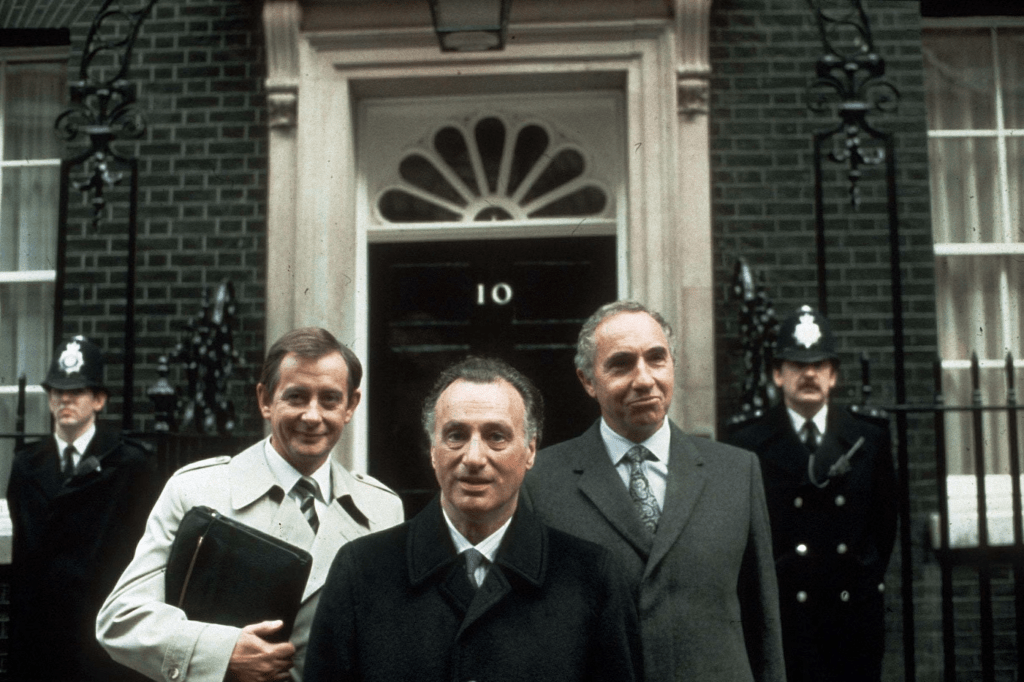
    Having studied economics at the LSE, one would think that Gary understands the necessity of nuance when discussing economic issues. To quote proud Oxford man Sir Humphrey Appleby in Yes Minister, “even the LSE is not totally opposed to education”. It’s clear that Stevenson omits nuance to strengthen his arguments.

    The three main characters of Yes Minister, Bernard Woolley (left, Oxon.), Sir Humphrey (right, Oxon.) and Jim Hacker MP (centre, The LSE)

    A recent video on Stevenson’s channel summarises his plan to “fix the UK”. In his view the “key, fundamental economic problem” facing the UK is economic inequality, and of the two types, income and wealth inequality, he generally focusses on the later. Without much explanation he says that wealth inequality is squeezing the government and the working and middle classes. He also adds that the political landscape of the UK means that successive governments refuse to tax the very rich, and instead continue to levy taxes on the working and middle classes. His solution to all of this: a (nondescript) wealth tax.

    I cannot too harshly criticise the final stages of Stevenson’s logic; if one truly believes that wealth inequality is the crux of the UK’s economic woes, a wealth tax seams a reasonable solution. It’s his diagnosis that I take issue with; a half-century of domestic and international economic evidence would suggest that UK’s true economic ailment is a much more complex story.

    The Citi bank building in Canary Wharf where Stevenson once worked

    In 2000, an hour of work by a British worker produced approximately the same amount of output as an American worker. In 2024, a UK worker produced 18% less than his or her US counterpart1. Given that workers are generally paid in accordance to what they produce, this is incredibly worrying. The plight of the British working and middle classes that Stevenson discusses extensively can be attributed to this phenomenon. He was challenged with this fact by Rory Stewart on The Rest is Politics podcast. Stewart broke down the problem very clearly for Stevenson; he explained how Britain is now poorer than the poorest of American states, how relatively egalitarian European nations have struggled to keep up with US productivity growth and that the US has achieved this feat despite extreme inequality. Stewart goes on to retort, rather sardonically, that “they didn’t do it through wealth tax”. To my dismay, Alistair Campbell soon bails Stevenson out as he struggles to provide a cogent response, instead blathering about fracking, big tech and natural resources.

    Explaining the lack of economic dynamism in the UK is a difficult task. Stevenson is right to mention “big tech”; the UK can’t claim to be the birthplace of any big-tech company. Our closest competitor is probably chip-designer Arm with a market cap of c. $145 billion – nowhere near the trillion dollar valuations of the US tech-behemoths. Although Stevenson may try and pass this off as exogenous in an attempt to refocus on inequality and wealth taxes, this is simply not the case; this FT Big Read argues that a lack of investment is the key culprit with the US accounting for 83% of the total of VC funding in G7 economies over the past decade. Doubtless, there are hundreds of interconnected factors at play.

    Stevenson follows the populist playbook to a T. The purpose of this article isn’t to provide a thorough case for productivity growth being the true economic ailment Britain faces. Nor is its purpose to provide a simple solution to this issue. As I have tried to emphasise, economic problems are incredibly complex. I do not deny that income inequality is an issue facing Britain; I do however resent the notion that is is the problem. Simple diagnoses such as these are misleading. Simple solutions do not generally exist. Stevenson’s inequality problem, wealth tax solution is no less harmful than Trump’s China problem, tariff solution. Populism exists on both extremes of the politcal-economic spectrum – if you aren’t fooled by one side, don’t find yourself fooled by the other.

    1. Figures drawn from FT The Big Read on US Productivity and Dynamism (here) ↩︎