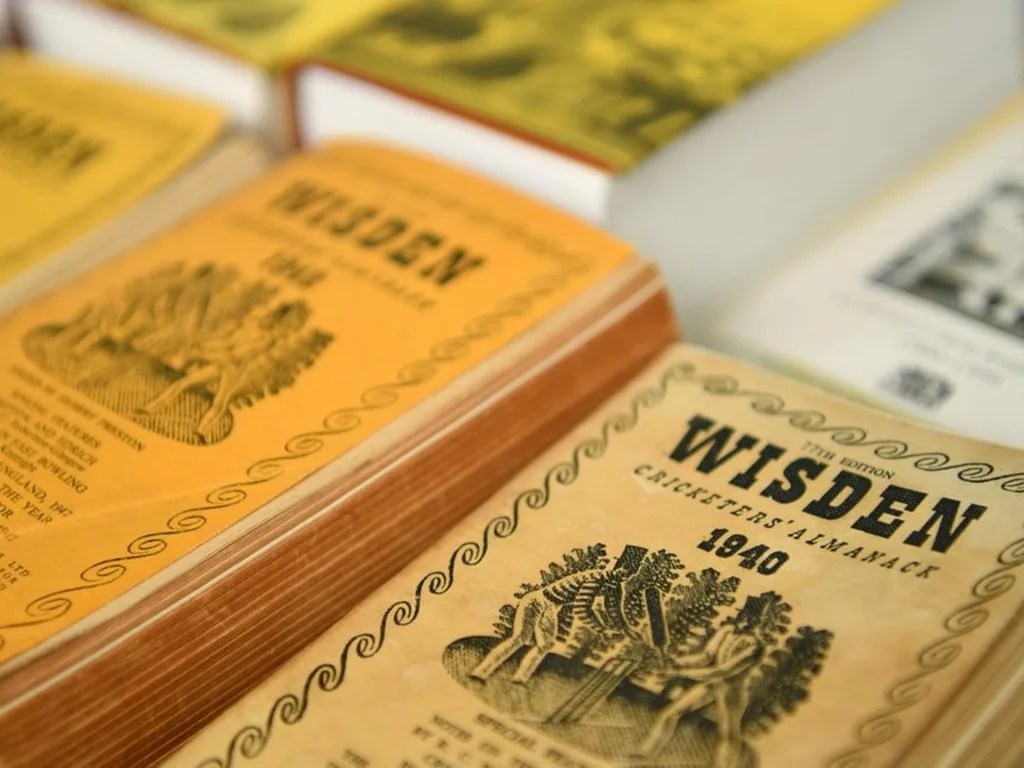
If you’ve ever visited the home of a cricket enthusiast, a so-called badger in cricket-lingo, you may have noticed a set of yellow books on their bookshelves. These books are short and thick with faded spines. But despite their unassuming nature, these collections often form the crown jewels of one’s library. Those in the know will instantly recognise that I refer to Wisden Cricketers’ Almanacks.
Wisden Cricketers’ Almanacks, more commonly referred to as Wisdens, are an annual cricketing publication. The first Wisden was published in 1864 and has continued uninterrupted ever since. Founded by English cricketer John Wisden, a 5ft 4ins fast bowler nicknamed The Little Wonder, the publication started as a competition to Fred Lillywhite’s The Guide to Cricketers. You may recognise the name Lillywhite; I first read it in a P. G. Wodehouse where Bertie Wooster spoke of having purchased a single all-purpose golf club from the Lillywhite’s sporting goods store. Such a store still exists today in Piccadilly but you can probably tell from the image below that it no longer reflects its rich heritage.

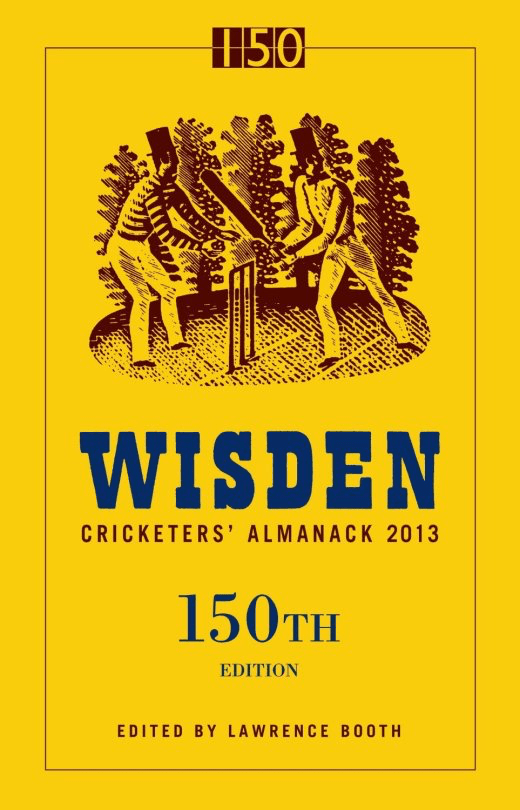
The cover of a Wisden remains its most iconic feature. Since the 75th edition in 1938, the publication has carried a bright yellow cover displaying the famous woodcut of two cricketers by Eric Ravilious. This woodcut was abandoned in 2003 in favour of photograph of a famous cricketer, that year a picture of Michael Vaughan. The woodcut returned, however, in 2013 to mark the 150th anniversary of the almanack.
The contents of a Wisden range from records to commentary on games. Editions even occasionally contain dialogue on new laws of the game. And by no means does Wisden discriminate against any form of the sport; within the same yellow cover one will find scores of international tests held at Lord’s and English schoolboy games held on dodgy wickets.
One might expect Wisden to have suffered a similar fate to phone books; ESPN Cricinfo is a much more accessible and effective source for cricketing statistics. Yet that hasn’t been the case. Wisden’s are today an unbelievably popular collectors item. The desire to maintain a full collection guarantee sales every April when the preceding years edition is published; each new edition of Wisden still sells around 35,000 copies. The earliest copies of Wisden, which were originally sold at a shilling per piece, now fetch thousands of pounds at auction. A full set is today worth over £100,000.
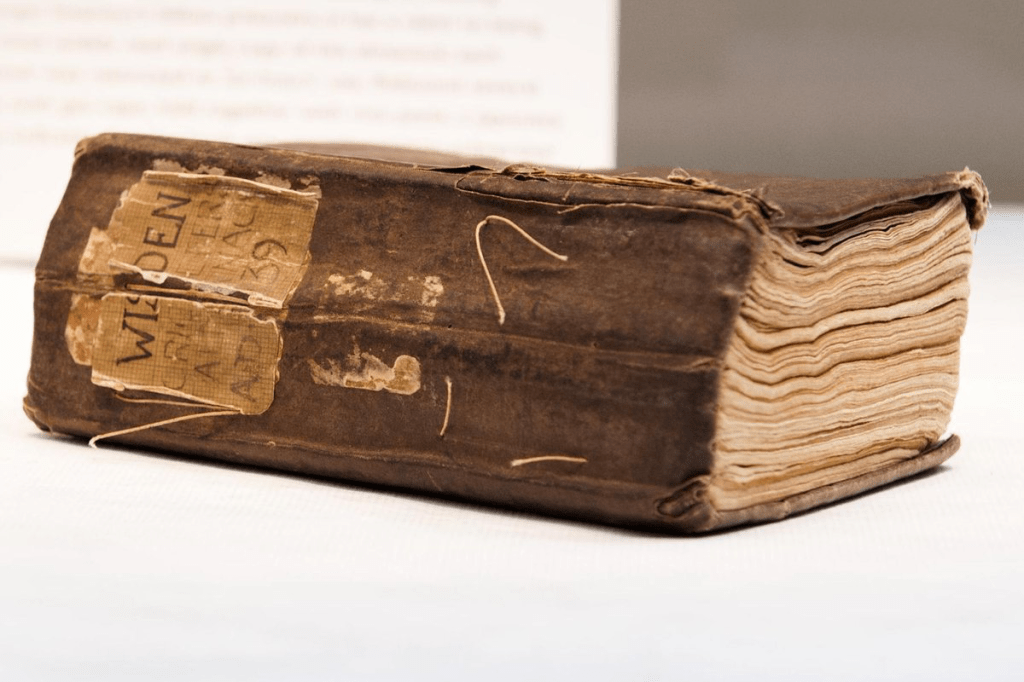
The most famous single copy of Wisden is a 1939 edition which belonged to distinguished cricket writer, E. W. Swanton. Swanton had it with him when he was taken prisoner by the Japanese when wounded in the Battle of Singapore. The copy proved so popular with the other prisoners of war that it had to be reserved in advance like a library book, and could be borrowed for no more than 12 hours. It was stamped “not subversive” by the guards and was so heavily handled that two prisoners rebound it using rice paste as glue. Today the book resides in the museum at Lord’s. Swanton later went on to describe his experience of playing cricket with makeshift equipment and under conditions of extreme privation and the constant threat of brutality in an article, Cricket under the Japs, for the 1946 edition of Wisden.
It is hard to think of something that embodies the spirit of English cricket more than Wisdens and the pursuit of collecting them. Not only does it capture the history of cricket, but given the enduring nature of the publication and the global reach of the game, Wisdens capture much more. The story of Swanton’s 1939 copy exemplifies the visceral nature of Wisden collecting, a hobby that many will find difficult to understand. I hope this post inspires you to try and find and flick through a Wisden at some point – an interesting scorecard or witty piece of commentary is sure to brighten any cricket enthusiasts day…

