Category: Notes

  • Why did Fama stop at Financial Markets?

    Why did Fama stop at Financial Markets?

    My undergraduate dissertation had the ever catchy title An Investigation into the Effects of Passive Investing on Equity Market Efficiency. I won’t bore you with the results; I certainly won’t bore you with the methods by which I went about getting them.1 Instead, I thought it may be interesting to think about the applications of efficient market theory to non-financial markets.

    I had the idea of writing this post when scrolling through Bridge of Highs, an anonymous online submissions page for Johnians where they can share thoughts on a variety of topics. This may range from complaints about rent prices to discussions about classist ent themes (as was the case for an après-ski themed ent). A few recent posts complained about how busy the John’s bar has become on a Friday with a sudden influx of guests from other colleges – a phenomenon which has inspired a campaign coined Jexit. A rather witty comment by a friend wrote “Bar is good on Friday? I’m bringing all of my friends next week”. The comment, deservingly in my opinion, received 20 likes. Although I can appreciate how funny this comment is, my first thought was that this was a brilliant case of how markets deal with information. Unfortunately I didn’t attend the subsequent Friday bar to see how the information was incorporated into market outcomes but I suspect it improved efficiency.

    Fama, who won the 2013 Nobel prize in Economics

    If all this jargon about markets, information and efficiency is confusing, let me explain. In 1970, Eugene Fama, who many consider to be the world’s most influential finance professor, published a paper on efficient capital markets. The paper defines an efficient market as one in which “prices at any time fully reflect all available information”. Consider the stock price of Apple for example. If some information becomes available that the new iPhone is incredibly popular, market participants (in this context, equities traders) will buy the Apple stock. The price of the stock will thereby rise and then new information about the new iPhone’s popularity is now incorporated into the price. The price, therefore, captures all sorts of information about Apple and its stock. Eugene Fama essentially formalised this idea and provided ways of testing for it in capital markets like stock markets, bond markets and derivatives markets. But Fama’s idea doesn’t have to be restricted to such contexts, it can even be applied to the market for cheap booze at St John’s College bar on a Friday night as I alluded to in my exposition.

    Fama focussed on prices being a signal for information. In asset markets, changes in demand and supply are almost instantaneously incorporated into prices. This is especially the case for liquid assets with lots of trading volumes, like the case of the Apple stock. However, this isn’t the case for many market. For example, the price of a double G&T at John’s bar has been £4.50 for as long as I can remember – this won’t change on a certain day just because the bar is especially busy. Therefore, focussing on prices in such a market is inappropriate; we must find another measure of efficiency.

    I can think of lots of information signals in markets beyond prices: boards displaying the number of available parking spots at a car park, signs estimating the queuing time for a ride at Disney Land and even the Google feature that states how busy a certain venue is at a certain time. In the absence of (flexible) prices, the market has devised its own way of passing information to buyers. But how do we build in the idea of efficiency?

    Well classical market efficiency is about how prices adjust to reflect available information. Maybe in such contexts with fixed prices, we may consider how supply and demand adjust (in the absence of a price adjustments) to incorporate new information. Will Google displaying that a certain coffee shop is very busy at a certain time deter customers from going when it’s busy? It probably will, and those who are more averse to long queues and busy spaces are more likely to be deterred than others, thereby improving welfare in the market.

    Rosslyn, London Wall, a very popular coffeeshop in the City

    We live in an increasingly information driven world and there has been a recent drive for information to be disseminated to and utilised by the masses. Think about the rising popularity if Polymarket, a cryptocurrency based prediction market that values the incorporation of market participants beliefs into placing odds on events. More widely, think about the current actions of Elon Musk with DOGE, arguing for more transparency over government spending. A recent project by my favourite political magazine, the Spectator Project against Frivolous Funding (or SPAFF) attempts to do the same thing for Britain. Efficient market theory probably remains the most developed framework for thinking about information and I suspect its applications extend beyond just the financial markets.

    1. For those interested, my dissertation is available here. ↩︎
  • Escaping Colonial Guilt

    Escaping Colonial Guilt

    “The people expected it of me and I had got to do it; I could feel their two thousand wills pressing me forward, irresistibly. And it was at this moment, as I stood there with the rifle in my hands, that I first grasped the hollowness, the futility of the white man’s dominion in the East. Here was I, the white man with his gun, standing in front of the unarmed native crowd – seemingly the leading actor of the piece; but in reality I was only an absurd puppet pushed to and fro by the will of those yellow faces behind. I perceived in this moment that when the white man turns tyrant it is his own freedom that he destroys.”

    You may recognise this passage from George Orwell’s 1936 essay, Shooting an Elephant. The essay, despite being only 3000 words in length, is one of the English writer’s most enduring works, ranking behind cultural icons Animal Farm and 1984. It encapsulates Orwell’s mental state during his time as a policeman in Burma in the 1920s. Alongside novel Burmese Days (1934) and essay A Hanging (1931), Orwell provides an almost full picture of British existence under Empire. I find the last sentence of the above passage particularly pertinent. In the context of Shooting an Elephant it refers to the loss of individual agency for those embroiled in the imperial machine. Today, it applies on a national scale, with colonial legacy having significant influence over life in the Britain.

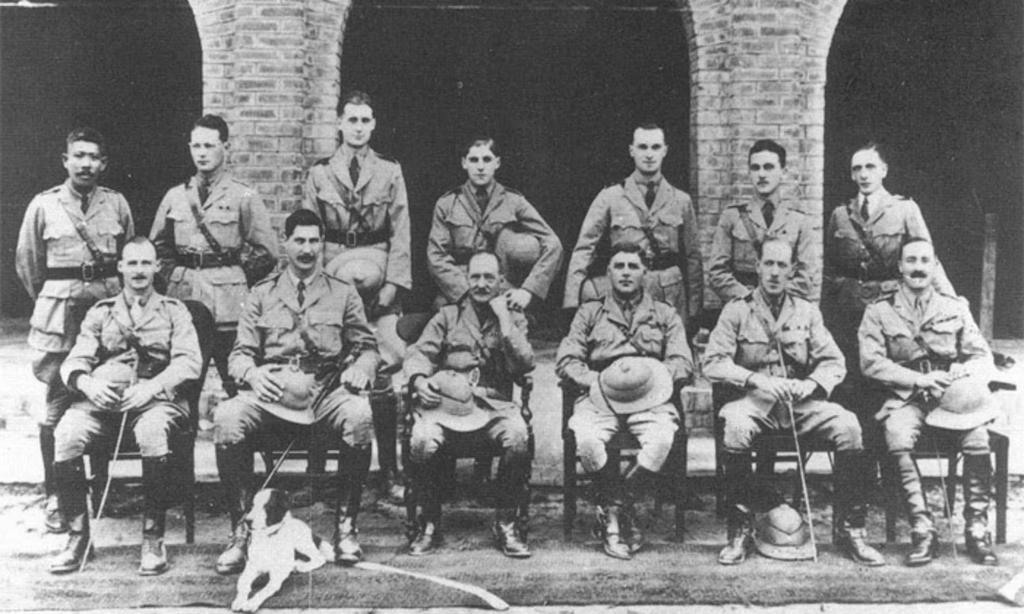
    Orwell (back row, third from left) during police training in Mandalay, Burma

    The prevailing view amongst those my age, especially those with origins from former British colonies (like myself), is that empire was an outright bad thing. In many instances, this is a result of a complete obliviousness to the facts. However, more often than not it is a result of the contrived interpretation of the facts to fit a preconceived viewpoint. Take for instance, the second longest uninterrupted cricket series in the world, The Battle of the Blues. The match has taken place annually since 1879 between two British founded schools in Sri Lanka, Royal College and St Thomas’ College. To a cricket lover whose family was educated at the former establishment, this can be no bad thing. To others it as a product of an education system designed to serve the colonial administration and a local upper class that would facilitate the British rule of Ceylon. Some would go as far as to argue that colonials forced cricket on Sri Lankans to teach them British Victorian virtues – an absolutely absurd interpretation of the facts. Similarly lopsided interpretations are made on the British established legal system, political institutions and infrastructure. In reality, to quote Oxford professor, Nigel Biggar, “if there is a debit column to the imperial ledger there is also a credit one.”

    The Battle of the Blues a.k.a The Royal-Thomian Encounter

    Ultimately, weighing the costs and benefits of colonialism is a futile task. Even if such an analysis were to conclude that British colonialism has been detrimental to the development of former colonies (as it might for say Belgian rule in Congo), this would be orthogonal to the case for dispelling sentiments of colonial guilt. My viewpoint is a utilitarian one; colonial guilt harms ex-colonisers and ex-colonies. It does so by creating a divided society at home whilst perpetuating feelings of victimhood overseas – a lose-lose scenario.

    British children today grow up being taught that Britain is a nation built on a bed of imperial sin. Take the drive to “decolonise the curriculum” which is pushing for history syllabuses to take a “critical view” on Britain’s imperial past. Instead, it serves as a veiled attempt to promote an ideological narrative that portrays empire as unequivocally bad; it is in no way interested in exposing children to a scholarly exploration of its complexities. I don’t think those pushing for reform would be too pleased if a child were to submit an essay touting the benefits of empire.

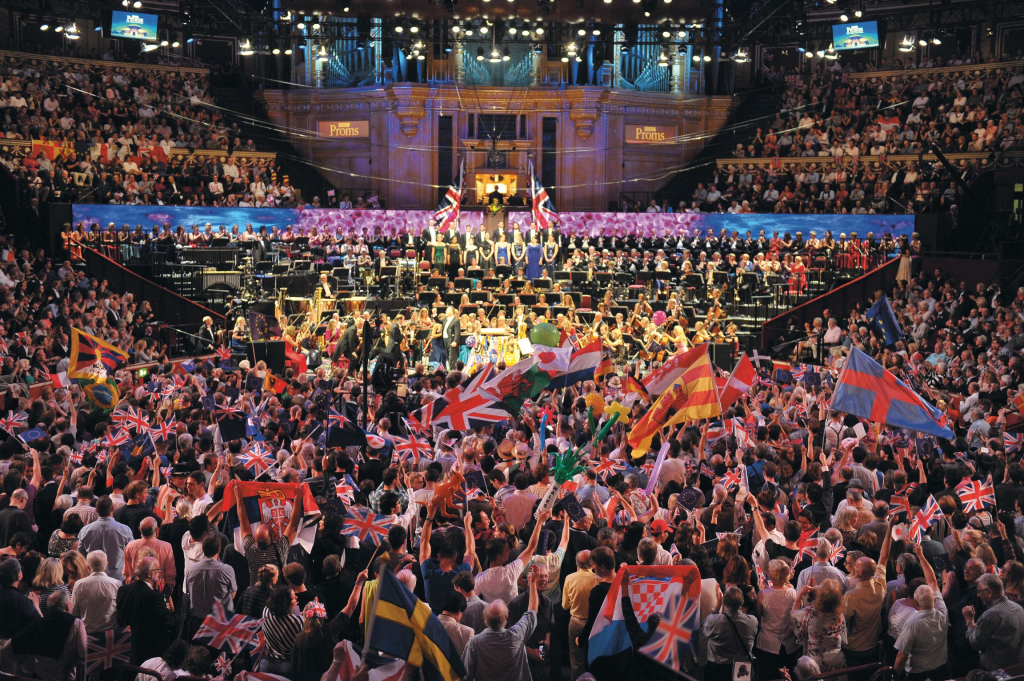
    And it doesn’t stop with history curriculums; throughout other parts of life in Britain there are attempts to foster feelings of colonial guilt. Take, for example, the BBC’s attempt to omit Land of Hope and Glory and Rule Britannia! from the Last Night at the Proms in 2020 due to their associations with colonialism and slavery. This was essentially an attack on British patriotism given the cultural importance of the songs. Thankfully, due to backlash from prom-goers this decision was overturned.1 In this instance those expressing their grievances were likely quite elderly – something I can tell you from my significant experience of attending Proms at the Royal Albert Hall. I fear that the same may not be the case 50 years down the line when those who have experienced a “decolonised” education are of typical promming age. Instead, we can expect the tearing down of statues and ripping up of paintings, as was the case for a painting of Lord Balfour at Trinity last March.

    The Last Night of the Proms at the Royal Albert Hall

    Colonial guilt not only burdens former imperial nations but also promotes a sense of victimhood that hinders the progress of former colonies. By fixating on the historical underdevelopment caused by colonialism, these nations risk neglecting contemporary challenges, such as poor governance, that are within their power to resolve. Instead ex-colonies will be eager to, and feel empowered to, push for reparations. You don’t have to be an economist to understand that a simple transfer of a dollar amount (however large) from Britain will not improve living standards permanently in these nations; long-term economic growth is a much more complex story. One thing that may be able to achieve growth in these nations is investment, especially from foreign investors based in western economies such as Britain. However, such investment may invoke memories of colonialism. Instead, ex-colonies will accept investment from China whose intentions are almost purely extractive, take their debt-trap diplomacy through the Belt and Road Initiative (BRI) which aims to expand the superpowers global geopolitical influence.

    You may struggle to see how these feeling abroad may be linked to colonial guilt at home. Well consider the recent news that Lord Hermer, Britain’s attorney general, advised Caribbean nations seeking reparations for slavey in 2013. Elsewhere in his past, Hermer has described “almost every element” of the British Empire as racist whilst arguing that children should be made to learn about its “legacy of violence”. In 2013, Lord Hermer helped force the Conservative government to pay out £19.9 million in reparations to Kenyans seeking damages for abuses under British rule between 1952 and 1962. The Caribbean officials, who he advised in 2013, are set to visit London this year in search of up to £18 trillion (yes, trillion) in reparations.2 Having individuals like Hermer high up in government communicates to former colonies that we are open to discuss our colonial past, thereby enabling their victimhood.

    Just as Orwell was a puppet of expectations and pressures beyond his control, Britain today risks being ensnared by the weight of its imperial past. A nation in which Brits are ashamed to be British is detrimental to the economic and social health of the nation. We need individuals to want to make Britain a better place, trust and value the communities they are a part of and be thankful for the opportunities that the nation affords us. Colonial guilt opposes these forces and it does so at the detriment of Britain’s former colonies who should stop picking apart the past.3 Instead they must focus on the future in order to develop. It is clear that there are no winners from sentiments of colonial guilt, the self-administered shackles of which must be removed immediately.

    1. I was particularly happy about this since I attended the 2021 Last Night with my friends and proceed to belt out the lyrics to both iconic songs. ↩︎
    2. The UK’s GDP in 2024 was just over £2.5 trillion. I would love to see the Excel on how the £18 trillion number is derived. ↩︎
    3. If this language sounds familiar, it is stolen from Rishi Sunak who, in 2023, said “to unpick our history is not the right way forward”. ↩︎

    PS: Throughout this post I have emphasised the importance of considering both sides of the argument. Therefore, I attach here a very entertaining Oxford Union debate speech by Shashi Tharoor in favour of reparations.

  • Embracing Eccentricity

    Embracing Eccentricity

    Last week, whilst walking to Sidgwick, I encountered a John’s fellow striding across the backs clutching a stack of leather-bound books. He wore a full charcoal-grey suit, a bottle-green slipover and a beautiful printed silk bow tie under a navy overcoat which extended just below his knees. I couldn’t help but stare in awe as he deposited his books in the red telephone boxes outside of the University Library before swiftly turning back to return to his rooms at John’s.

    Johnians will know instantly which fellow I refer to since this was no special occasion; he has, to the best of my knowledge, never been spotted dressed down. In that moment, I thought back to my daily commute into the City of London. At 6:50, men in navy trousers would traipse themselves from Moorgate station to their respective office buildings; not only did they lack a jacket or tie, they lacked the pip in their step that this fellow had running a simple errand. But it wasn’t surprising that these salarymen seemed to have stifled characters – the corporate world is a prescriptive one. Envy was the overriding emotion that I felt in that moment; the fellow’s freedom to embrace his eccentricity awakened the green-eyed monster in me.

    The book return boxes outside the University Library

    Often, eccentricity goes hand-in-hand with a lack of responsibility. When individuals are given free rein to act how they want, they will of course choose to be their true selves. Take the (rather extreme) example of Regency period eccentric John Mytton whose Wikipedia page states his occupation as “rake”. Brilliantly, his infobox lists that he is “known for” his “flamboyant eccentric behaviour”. Some other gems from his page include claims that he took 2000 bottles of port up to Cambridge to sustain himself during his studies; his wardrobe consisted of 150 pairs of hunting breeches, 700 pairs of handmade hunting boots, 1,000 hats and some 3,000 shirts; and his favourite horse, Baronet, who had free range inside his home, was fed on a diet of steak and champagne. One wouldn’t think it inapposite, therefore, that Mytton earned the nickname Mad Jack.

    Mytton riding his pet bear indoors to entertain his friends

    After briefly reconsidering a career in the city, I thought it more constructive to use the John’s fellow (and Mytton to a lesser extent) as a source of inspiration. One shoudn’t let their career chip away the idiosyncrasies of their personality. Take David Solomon who was able to work his way not only to the top of the corporate ladder but to potentially the most coveted job in finance: CEO of Goldman Sachs. Until very recently, Solomon continued to DJ under the moniker DJ D-Sol, playing gigs in Manhatten, the Hamptons and the Bahamas. Although the Goldman board put a stop to this in October 2023, it goes to show that one musn’t sacrifice his personality to achieve corporate success.

    I can think of a few actionable measures to incorporate your personality into 60+ hour weeks. The first is to not fear breaking some social norms. Do not be afraid of wearing bold socks to the office. Maybe wear a bottle green slipover to the office instead of a plain boring navy crewneck. Colleagues will most likely respect you for it than balk.

    The second is to spend time and money on the things you enjoy. Years of saved bonuses will leave you asset rich, personality poor. If golf is your passion, spend the time whenever possible to head out of London to a good golf course. Pay that extortionate green fee. The occasional session at an indoor golf simulator is no substitute. If you are really into watches, don’t buy a Rolex just to impress your colleagues; buy that Jaeger LeCoultre you’ve always wanted.

    The Old Course at Sunningdale, a 40 minute train journey from Clapham Junction

    Finally, and most importantly, you must work a job that enables you to enact the two aforementioned steps. If your boss were to balk at your choice to wear striped socks, maybe it is time for a new job. I once read, and can’t exactly remember where, that it is acceptable to wear a colourful pair of socks to hedge fund interviews because it indicates that you are a risk taker who might bring this attitude to their investing. It was most likely just a Wall Street Oasis post, but it helps me sleep nevertheless…