Category: Notes

  • The Oxbridge Contradiction

    The Oxbridge Contradiction

    Why do Oxford and Cambridge exist? Why does Oxbridge exist? To some, the second question may appear to be nothing more than a simple contraction of the first. However, to most Brits, Oxbridge means something very different to Oxford and Cambridge. For example, the sentence, “I’m playing a game of squash at the Oxbridge Club” would be one of supreme distaste in polite conversation. Instead the Pall Mall based members club (limited to those who have matriculated at either of the two institutions) is called “The Oxford and Cambridge Club” and often referred to as the O&C – much more palatable. This distinction has had a tangible effect on the way the world’s second and third oldest universities have been governed. Despite being a bit of an old fogey, I think the general direction of change over the past few decades has been a positive one. However, more recent reforms threaten to overshoot the mark.

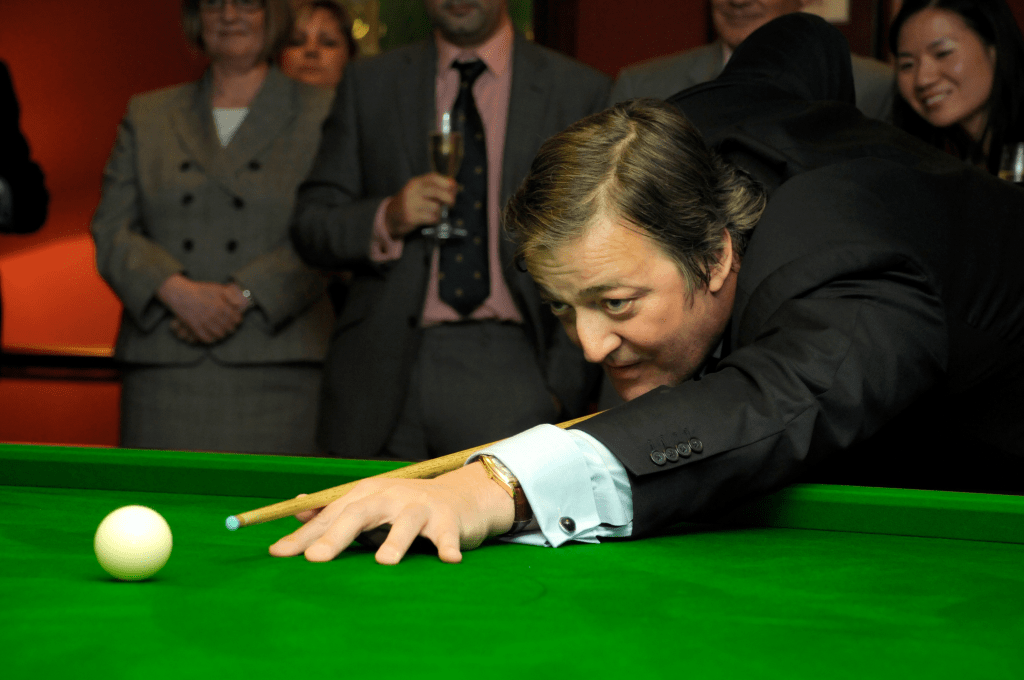
    Cantab, Stephen Fry, playing billiards at the Oxford and Cambridge Club

    Now to return to the first question: “Why do Oxford and Cambridge Exist?”. This is the easier of the two to answer since it is analogous to asking “Why do universities exist?”. They exist to educate their students, facilitate research and create an environment and community in which these two things can thrive. Over the last 816 years in which Oxford and Cambridge have shared the limelight, they have certainly achieved this. An Oxbridge education is often the common denominator amongst historical greats in politics, science and the arts. Think Nehru, Boyle and Byron. Today, this is no different; of 2024’s 11 Nobel laureates, 7 were associated with one of the two universities. Our television screens are littered with Oxbridge graduates such as Hugh Laurie, Eddie Redmayne and Tom Hiddleston.

    Now to the more difficult of the two questions: “Why does Oxbridge exist?”. The portmanteau invokes images of gothic architecture, plummy voiced undergraduates in gowns and a head start to a (potentially rakish) career in British politics. Some at Oxbridge may struggle to empathise with this view. Really? Of the six names mentioned in the last paragraph, two were educated at Harrow, four at Eton. The distaste for Oxbridge is not formed on misinformation – it is an inevitable artefact of the British class system. It is, however, a little outdated.

    Oxbridge today includes people from a much broader set of backgrounds. Women, state educated individuals and ethnic minorities are very well represented. This change has both been natural and manufactured. The outcomes, I believe, are broadly positive; although we may no longer be able to field as strong of an Eton Fives squad, Cambridge continues to thrive academically. Discrimination against “privileged” students in the (natural) sciences is limited. In the humanities it most certainly exists but here a diversity of backgrounds is valuable. An Old Harrovian will probably have a very different opinion on Churchill to an inner-city state-educated Indian pursuing a history degree; the two can (and should) talk it out and reach a realistic middle ground.1 The view of Oxbridge, with Boris Johnson as its archetypal student, is certainly no longer accurate.

    Old Harrovians Nehru and Churchill

    It is this expired view that has meant that Oxford, Cambridge and the country continue to force policy changes that now go beyond what is reasonable. And unfortunately, these attempts at attenuating the less desirable features of Oxbridge now threaten to destroy what makes Oxford and Cambridge great. The most recent example of this, reported by the Telegraph, is that Oxford and Cambridge are moving away from “traditional” exams toward more “inclusive assessments” to boost the grades of minority groups and poorer students and close the “grades gap”.

    As part of my BA degree I spent 37 hours in an exam hall. Countless hours at my desk were devoted to practicing solving problems under exam conditions. I did my best to replicate this once in the exam hall. In no way did being an ethnic minority limit my ability to do so. The notion that it would is frankly racist. Furthermore, this sort of policy threatens what makes Oxford and Cambridge great. Will we let less talented students get into masters and PhD programs? Will our research struggle as a result? Will lesser institutions like Imperial, free from these Oxbridge based pressures, benefit whilst we lag behind? Probably.

    To me the solution is obvious: slow down. Without doing so, overshooting is inevitable. It takes time for the general view of Oxbridge to adjust to the policy changes of the last few years. Oxbridge now has more state-educated students than ever. Perhaps these state educated students will go on to take public facing jobs in media and politics, thereby altering the view of Oxbridge. The same could be applied to a range of stratum. But this doesn’t happen instantaneously; it will take years if not decades. Then we can reconsider whether Oxbridge needs any more reform. I expect the answer will be no.

    1. I appreciate that this requires balance; the tradeoff between diversity and meritocracy is tricky and many (rightly or wrongly) feel hard done by current efforts. This is a topic for another time… ↩︎

    PS: I know I promised an article on Wisden Cricketers’ Almanacks – that is still in the pipeline. Possibly also a short post on 19th century squire, John Mytton. I’m saving these posts for when I am a little busier.

  • Suffering from Leisure Class Anxiety?

    Suffering from Leisure Class Anxiety?

    Imagine a world in which you can devote the majority of your waking hours to the things you enjoy. Days of early morning commutes to a sedentary desk job formatting spreadsheets are now a distant memory. Instead, you roll out of bed to a full cooked breakfast; gone are the days of overnight oats. You then take a leisurely stroll to your local cricket ground where you are meeting 10 of your friends. Today is the 4th day of the test match you are playing against a rival amateur team. What bliss!

    “I am not always punctual in rising. On this particular morning I was feeling so supremely braced that I actually gave the bad old alarm clock a cold and scornful look as it tried to hoist me out of bed at 8:30. Why not, I thought, give it the miss in baulk and snooze on till luncheon?”

    – Bertie Wooster, The Inimitable Jeeves by P.G. Wodehouse1

    But will this really be the typical life of those living in the AI world? I very much doubt it. Society in the AI world, I believe, will be vastly more unequal than it is today. The reasons for this are two-fold: the first is that AI will concentrate economic value with those who understand, use and own it. Very simply, imagine that AI replaces all the workers in an industry; the returns that once flowed to workers (through wages) will now flow to those who control the AI infrastructure the industry now relies upon. The second is that increased time for leisure will mean more time for social signalling – a non-negotiable of human nature. Consider a corporate office in London. Your boss may have a flashier watch than you, but you work in the same office, wear broadly the same clothes and most probably both get the Tube to work. This doesn’t apply to on the weekend – your boss might spend it at their country house whilst you are stuck in your London apartment; they might go shooting whilst you pop out for a Gail’s. In an AI world, the weekend is unending.

    A straightforward shooting weekend

    It may, therefore, be of interest to think about where in society one might rank once the AI revolution has run its course. I present a framework of “leisure classes” to formalise such thoughts. The framework comprises the following four classes:

    Leisure Class 1 is composed of the AI overlords – they are the very few who have attained unprecedented (in the most literal sense) level of wealth. They have achieved this feat by owning a large share of the AI infrastructure that the world’s business operate on – they own data centres and crucial AI intellectual property. These businesses, due to their large economies of scale, are likely monopolies and therefore extract vast profits. LC1 includes the likes of Larry Ellison, Sam Altman and the Google co-founders, Larry Page and Sergey Brin. Not only can they afford mega-yachts and private jets but they can afford holiday to the moon and Mars. The race to be in this class is over – this rocket has already had lift-off.

    Members of Leisure Class 2 will essentially be able to enjoy all the luxuries afforded by those in LC1 bar maybe the most opulent. Members include two types of people: the first is those who have built AI businesses upon the aforementioned infrastructure. The vast applications of AI present a variety of opportunities to be a member of LC2. The AI world is your oyster; a smart idea and a little execution could land you a spot in LC2. Those at the top of leisure industries will also be members of LC2. Consider the various activities that humans enjoy – those at the top are AI immune. No one wants to listen to music generated by an AI. Neither do they want to read a book written by a large language model or watch two robots play chess against each other. It is the human imperfections of these things that we love. This is already acutely apparent: consider the pushback against completely replacing line judges at Wimbledon with Hawkeye. No one turns up to Carnegie Hall to watch a self-playing Steinway perform an AI generated piece of music. Compare this to Nobuyuki Tsujii’s moving performance of his own composition, “Elegy for the Victims of the Tsunami … in Japan” (here). Talented individuals like Tsujii will be increasingly valued in a leisure dominated world and compensated duly. Again, you could be a part of this sub-category of LC2 – a bit of talent and hard work could get you there.

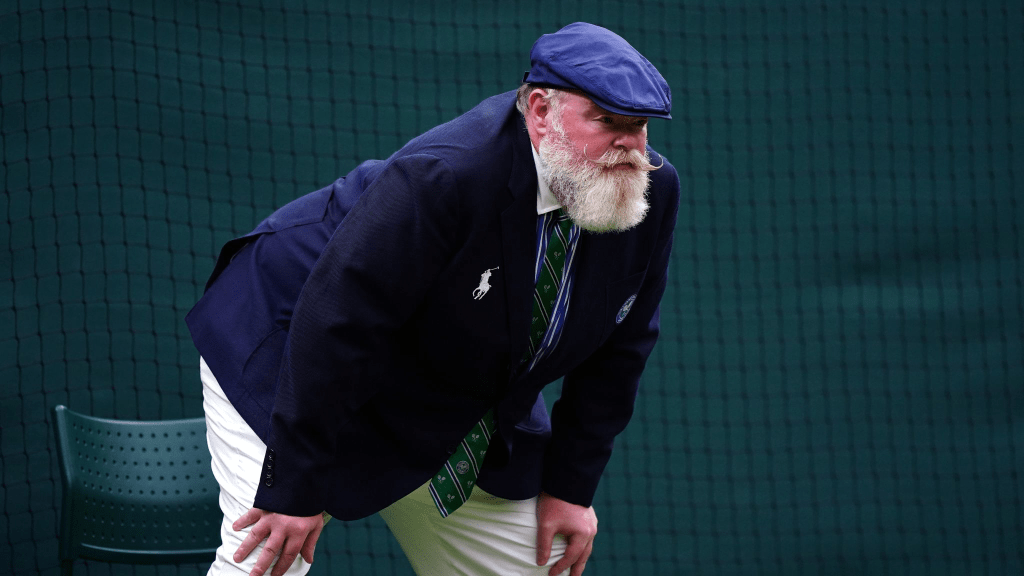
    A reincarnation of W.G. Grace picking the ball at Wimbledon

    Leisure Class 3 will be for those that work for AI businesses. And because of the super-intelligence of AI, the scope of these roles will be very limited. Human workers won’t manage the allocation of AI resources, there will be an AI to do that. These roles will almost certainly be mandatory regulatory roles. These individuals will research AI safety concerns and implement regulation according . Despite the required expertise, these roles will not generate much revenue thereby limiting their financial reward. Despite this, they will afford much higher quality leisure than those in the final class below them.

    Leisure Class 4 will comprise of those who were unable to capture any of the opportunities from the AI revolution. More likely that not, these individuals will conduct manual tasks which are yet to be automated and will rely on a universal basic income bestowed by the benevolence of the AI overlords in LC1. These individuals will afford a subsistence level of leisure – maybe a SkySports subscription or an occasional visit to watch second tier sports leagues in person.

    Having recently convinced myself of the above framework I have found myself suffering from “leisure class anxiety”. The prospects of LC2 membership are much more palatable to me than a bleak life in LC3 or, god forbid, LC4. It is therefore no surprise that I have thrown myself headfirst into a machine learning project over the past few days. In fact, it’s part of the reason I’m trying to consistently write on this blog – a role as a journalist at the FT or the Spectator may bag me a spot at the bottom of LC2. For the time being, I think this prudent. Silently, I would welcome a mathematical proof showing the inability of AI to do certain tasks. But until that day comes, I’m going to keep buggering on.

    1. It was the reading of P. G. Wodehouse’s Jeeves books that sparked me to write this three-part series on AI and leisure. ↩︎
  • The Debasement of Intelligence

    The Debasement of Intelligence

    My last post concluded by expressing an optimism for the future of a world impacted by AI. This conclusion was almost entirely predicated on the fanciful assumption that AI will have minimal distributional effects. I chose to take this approach as a little jibe over the unrealistic assumptions often seen in economic models and in the interest of keeping the post snappy. This post, however, repeals that assumption. It is therefore unsurprising that its conclusions take a more Orwellian tone.

    Let me first make some assertions about the role of human intelligence in modern western economies:1

    • Assertion 1
      • Intelligence is the most significant factor in determining one’s economic prosperity. There exists a reasonable amount of empirical evidence for this and the causality is intuitive.
    • Assertion 2
      • The relationship between intelligence and economic prosperity has become stronger in recent history. Societies in the West have become increasingly egalitarian, meaning that other factors are less likely to inhibit the returns from intelligence than they once were. Think class barriers, racial prejudice and educational opportunity. They have all improved.2
    • Assertion 3
      • The marginal returns of intelligence at the top of the distribution are higher today than they have ever been. This is most likely due to the increasing complexity of the problem that humans solve. I have witnessed this anecdotally. A few decades ago, an Oxbridge education (in any discipline) would have guaranteed you a good job in the city. Pay in the city would have been reasonably similar amongst graduates and progress there-on-out was not hugely dependent on intelligence. Today, Cambridge mathmos earn a significant premium over their peers by working in quant finance. Differences are even more granular; mathmos at the top of their class-list do noticeably better in the job market than those further down the ranks.
    Printed copies of Mathematical Tripos results being thrown from the balcony in the Senate House, Cambridge

    Now introduce AI. Access to AI will give employers unlimited access to intelligence – its form now computer based rather than human. We are already at the point where human and artificial intelligence are on par. Before long, AI will be factors of magnitude more intelligent than humans. Furthermore, AI will dominate human intelligence beyond just raw power. Human intelligence suffers from the foibles of human nature. Humans get ill. Humans engage in office chit-chat on company time. Humans require socialising via Thursday evening drinks and spend Friday mornings slightly hung-over only to leave the office at 2pm. In contrast, unprecedented levels of investment into data centres and energy infrastructure will give companies on-demand access to 24/7 super-intelligence.

    What does this mean for our future selves? Well, this will lead to what I call the “debasement of intelligence”. Intelligence will become so abundant that the returns from having more of it than others will be negligible. 10 IQ points here, 10 points there will amount to nothing – these differences will be dwarfed by the intelligence gap between humans and AI in general. This will work in much the same was a the debasement of a currency – 10 Venezuelan bolívar here, 10 bolívar there will do nothing for you when a beer now costs over 8 million bolívar. And so it follows that intelligence will have a negligible effect on one’s success – different factors altogether will determine individual prosperity. Therefore, it stands that the three assertions stated above will cease to hold. If you’ve been a beneficiary of these assertions, and I suspect if you’re reading this you have been, then I’m sorry to say it, but you’re out of luck.

    What does this mean for the leisure oriented society3 I predict will form as a result of AI? Well I think we will see something I am going to call “leisure classes” emerge.4 Today the class structure is most evident in the jobs people do; think of the universal terms “blue-collar” and “white-collar” and “working class”. A world of leisure necessarily means that the type of leisure people engage in will define their class. Leisure classes already exist today; a day of test cricket at Lord’s costs c. £200, a chance to watch from the pavilion as an MCC member requires proposal by a full-member and a thirty-year wait on the waiting list. The AI revolution will widen such gaps.

    An MCC Member at Lord’s

    I am still developing my theory of leisure classes which I will flesh out in my next blog post. Nevertheless, I am already certain that one’s current “working” class will not necessarily map onto an equally ranked leisure class – a frightening thought for those towards the top, an opportunity for those who aren’t.

    PS: I endeavour to make my next blog post the final one on AI for a while – a brief history of Wisden Cricketers’ Almanacs is to follow.

    1. Here, I refer mostly to service based economies like the UK. ↩︎
    2. This is objectively true – anyone who believes otherwise has been blinded by day-to-day news headlines and failed to see the big picture. ↩︎
    3. If the notion of a leisure oriented society is new to you, please refer to the final two paragraphs of my last blog post. ↩︎
    4. Credit to Aineias Arango, with whom I was in a conversation with when we denominated this idea. ↩︎