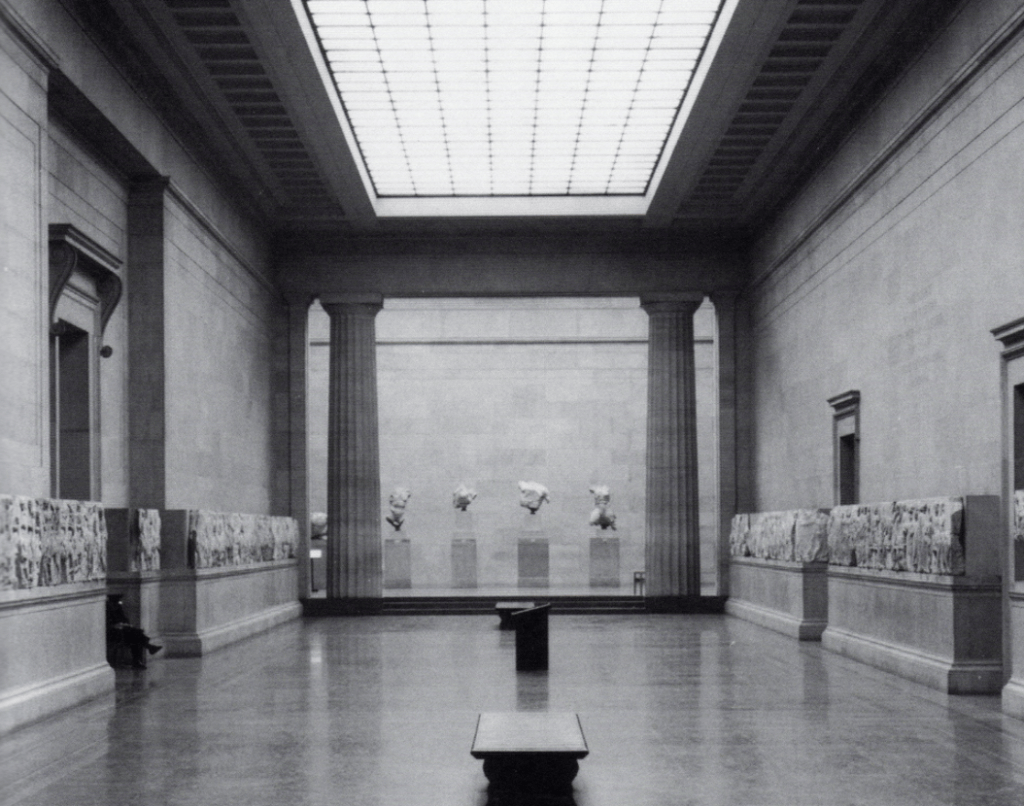
One of the joys of living in Bloomsbury is being just a few hundred yards from the British Museum at the weekend. If I stumble across a new historical fascination during the week, I can integrate a visit to the museum into my Saturday morning coffee run. Given the richness of the establishment, I can reasonably expect to find an artefact relevant to my new interest.
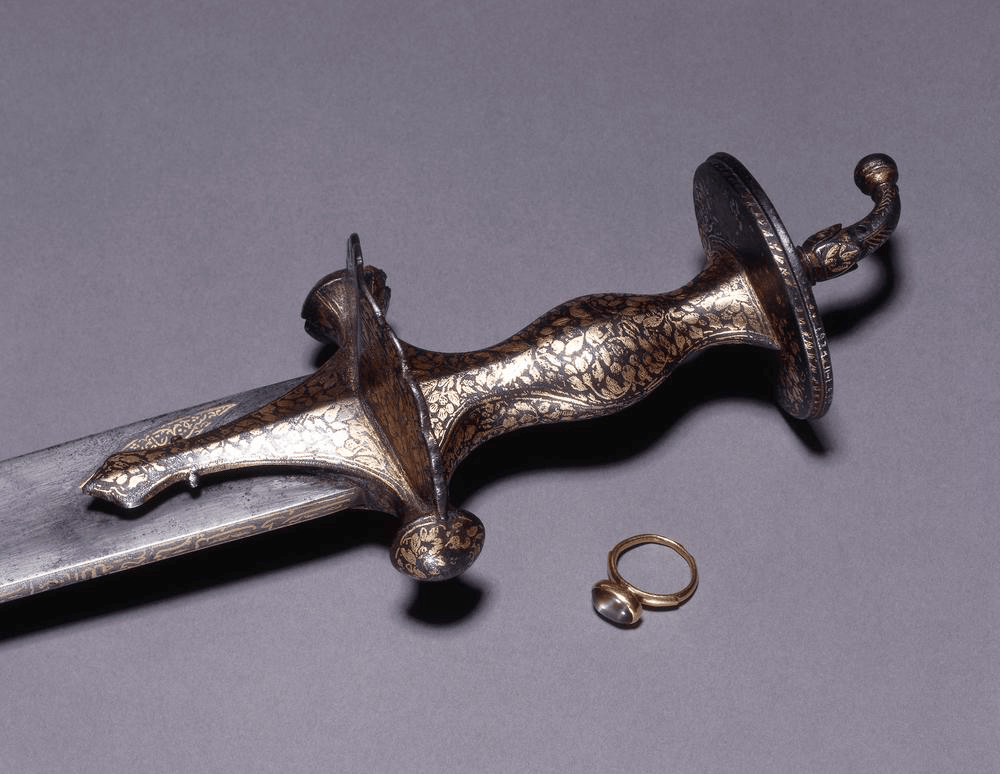
When I went to see one of Tipu Sultan’s swords, I was delighted to also find Bahadur Shah Zafar’s miniature Quran right beside it in the display cabinet. Both represent incredibly important events in Indian history. The sword was acquired when the Mysore empire fell to East India Company forces in 1799 and Bahadur Shah’s Quran was found in the Red Fort in Delhi after he had fled British forces in the aftermath of the 1857 mutiny. Ultimately these invaluable items sit 4,000 miles from India, as a direct result of colonialism. They are “loot” in every sense – a word which originates from the Hindi lūṭ (लूट), meaning plunder.
A few weeks after this visit, one of the most contentious items in the British Museum made the headlines. Talks to loan the Elgin Marbles to Greece had reportedly broken down, with the Greek government demanding that they be returned outright. They were adamant that Thomas Bruce, the seventh Earl of Elgin, had stolen them in the early 19th century, rather than acquired through a firman (permit) from the then-ruling Ottomans. That weekend, I visited the marbles which are tactfully signposted the “Parthenon Sculptures”. To kill two birds with one stone, I visited the Benin Bronzes, the other most disputed exhibit in the museum.
Until that visit I had been largely dismissive of the case to return these artefacts to their places of origin. But as I stood in the Duveen Gallery and later stepped out onto Great Russell Street, I noticed for the first time that the museum’s visitors were not predominantly British. Many, perhaps most, had travelled from the lands where the museum’s greatest exhibits originate. Millions, if not billions, back home will never get the chance.
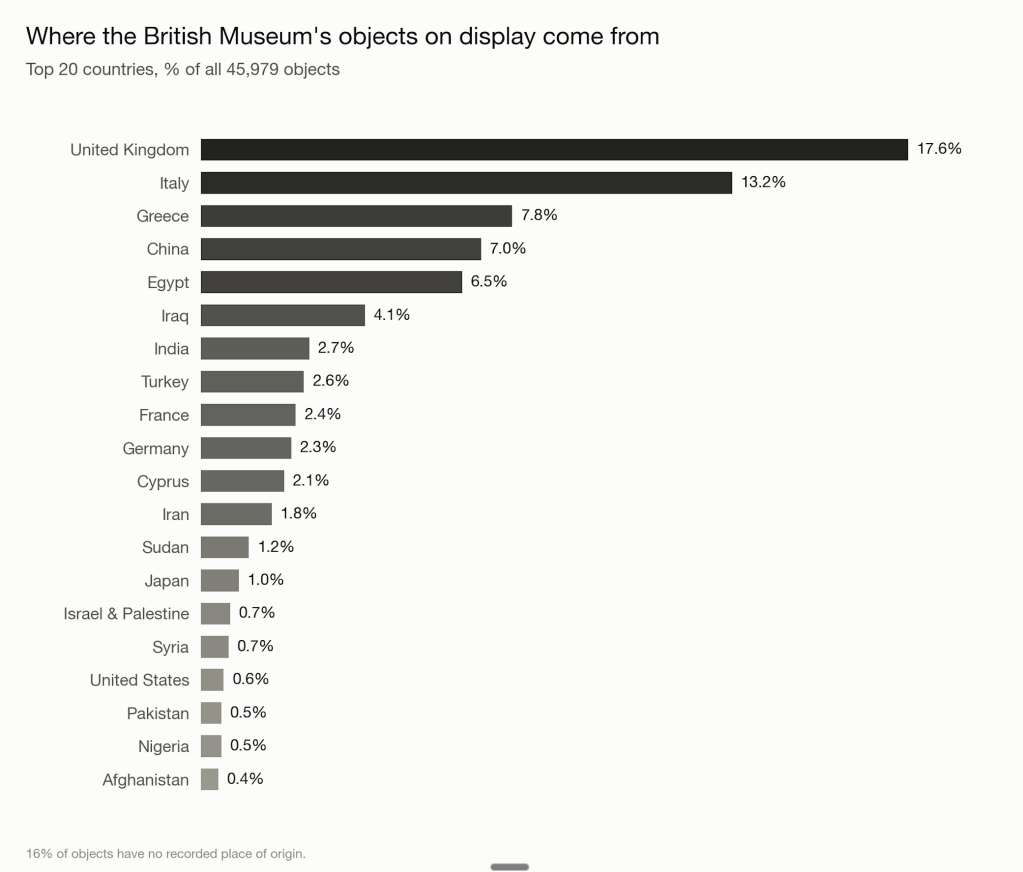
Many imperial artefacts have featured in foreign policy discussions in recent years. Some, like the Marbles, have an unambiguous origin, and thereby an obvious claimant. Others, like the Koh-i-Noor, are less clear cut. In a past post I argued that Britain shouldn’t suffer from colonial guilt, on the grounds that it’s mutually damaging to ex-colonies and ex-coloniser. In this case such an argument is difficult to make – returning prized historical artefacts to a peaceful nation like Greece, where they will be preserved and appreciated, would cost only Britain and the British Museum.
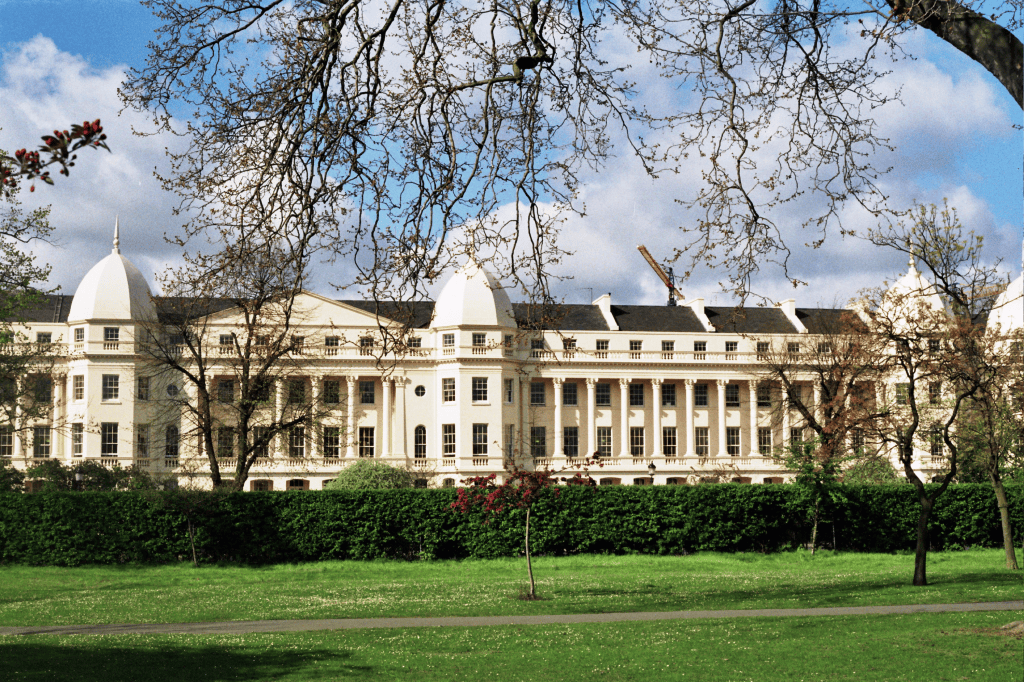
However, I think there is one compelling argument to keep artefacts like these in museums in the West for the time being. Civilisation, and especially Western civilisation, didn’t develop in isolation. Our system of democracy is based on Greek and Roman principles. Throughout history our greatest minds have pursued the classics. Our language features words derived from Hindi and Arabic. And these influences also manifest in our architecture – the British Museum itself is built in a Greek Revival style and Sussex Place, a row of townhouses lining the west side of Regent’s Park, features ten cupolas with clear Islamic influence.
The British Museum provides an unparalleled opportunity to see all these influences in one place. If items were returned permanently to their places of origin, there would be hundreds of national museums across the developed and developing world dedicated to their isolated histories. It would make it impossible to appreciate the joint history of modern civilisation.
Around the world there are groups weaponising a history revised through an isolationist lens. They will tell you that England is purely the product of the English. Many will tell you that modern India is purely a product of Hindus. This is simply not true. A visit to the British Museum could dispel that misconception.
A global system of loans between museums is the clear solution. Talks between London and Athens have stalled because Greece believes accepting a loan would mean accepting British ownership. Ownership is a zero-sum game. An agreed system of loans could mutually benefit societies across the globe. Until those arguing for restitution appreciate this, we should preserve the British Museum and the rare view it offers of civilisation’s global roots.


Leave a Reply